For my journey back to San Francisco, I decided to fly American so I could rack up more British Airways tier points/Avios. I’m now within striking distance of another year of Gold Status / Oneworld Emerald. At the end of the year, BA will return to its pre-pandemic requirements of 1 500 tier points for Gold Status and 5 000 tier points for Gold Guest List. Luckily, for anyone who hits the reduced requirement of 1 125 tier points before December 31, 2022 will automatically renew Gold Status for one additional year.
As frequent readers will be aware, tier points on BA for partner flights (nearly exclusively) fall into three categories: <2 000-mile flights, 2 000 – 6 000-mile flights, and >6 000-mile flights. I’ve never actually been on a flight over 6 000 miles, and if one is actively trying to get more tier points for BA status, I’d actually recommend breaking a 6 000 journey into 2 legs >2 000 miles if possible. For a business class flight (or domestic First Class flight in the US) of <2 000 miles, 40 tier points are awarded, compared to 140 tier points if the flight is >2 000 miles (160 if the flight is >6 000 miles).
What this means for this journey is that a flight from Richmond to Chicago/Dallas to San Francisco would earn 80 tier points, whereas this journey from Richmond to Charlotte to San Francisco will actually earn 180 tier point; 100 extra tier points in exchange for no substantial difference in total trip duration or cost.
The first flight on this journey, from Richmond to Charlotte is one that I’m intimately familiar with and was actually my first flight (on US Airways) when I was 4.
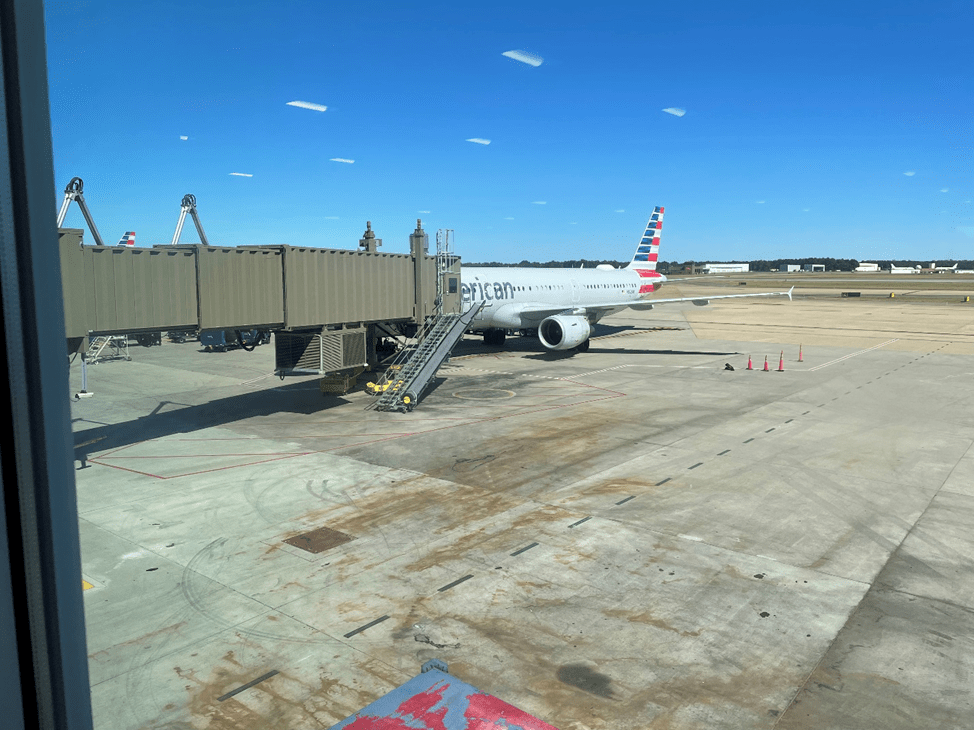
Richmond Airport is one that usually has Embraer 175s or A319s for most flights; however, for some key hub flights, larger domestic aircraft can occasionally be found. For example, Delta flies 757s to/from Atlanta, and, here, American offered me an A321 for the short 45-minute flight. While an A321 (190 seats on AA) is a similar size to a 757 (199 seats on DL), I always think that a 757 is substantially bigger, and I think that’s because 757s are boarded usually from door 2, like most widebodies, whereas the A321 is always boarded from door 1.
I find Richmond to Charlotte to be a strange route because (1) it’s actually one of the top routes out of Charlotte, and (2) depending on the time of day/year, you can get anything from an A321 to an ERJ-145 (historically) or a CRJ-900 (currently).
In the case of the A321, while the runways and demand can support an A321, the gate area in concourse A really can’t. Our gate had seating for maybe 75/80% of the people on the flight, which is not American’s fault, but rather Richmond Airport’s fault. Though, it looked to me like the higher numbered gates in the concourse had more seating.
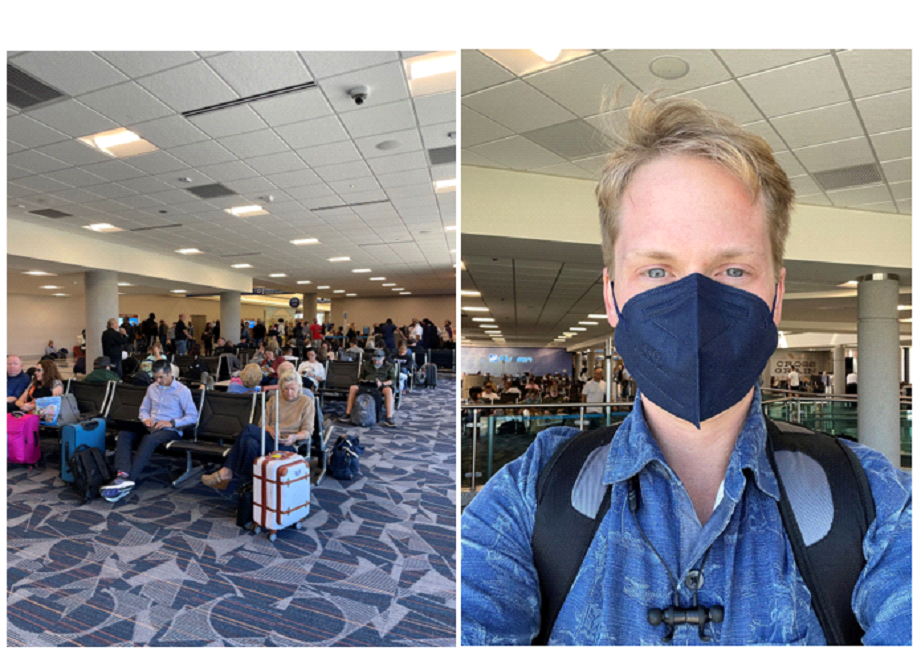
Luckily, between TSA PreCheck and priority check-in, I made it a point not to get to the airport too early, and so I wasn’t stuck standing for too long before boarding began. Due to the lack of seating options, I actually decided to board earlier than I would usually. That also meant I was able to get a better picture of the First Class cabin.
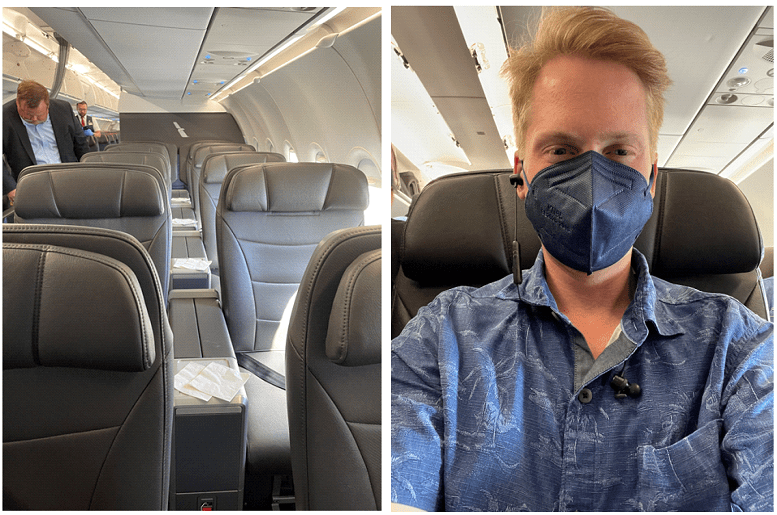
American’s new First Class seats are well-standardized now throughout their narrow-body fleet, and the A321 has 20 of them. I assigned myself my favorite seat: 1C; when I purchased the ticket, the cabin was empty, but by departure time, it was completely full, which is typical for domestic US flights.
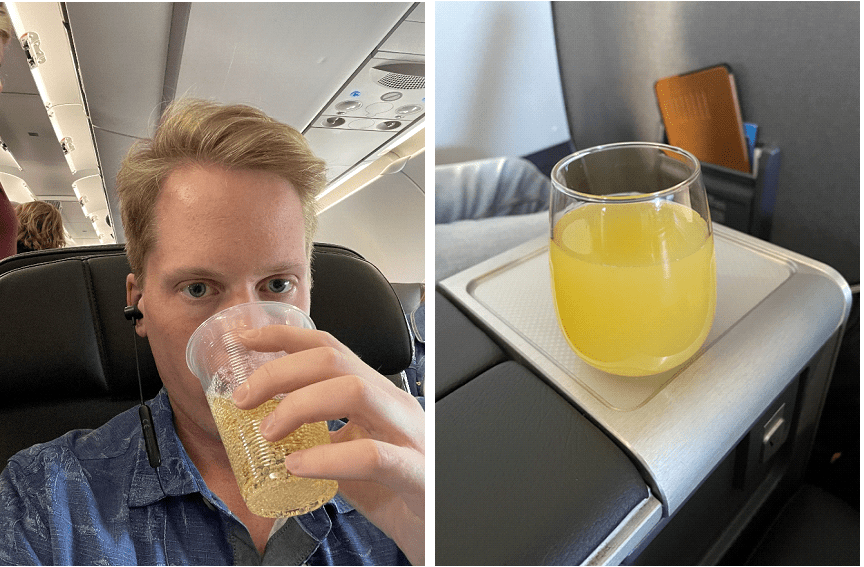
I was offered a predeparture beverage, and so I took some champagne. For such a short flight, American doesn’t offer any service beyond a beverage service. Once in the air, I got a mimosa, as per usual.
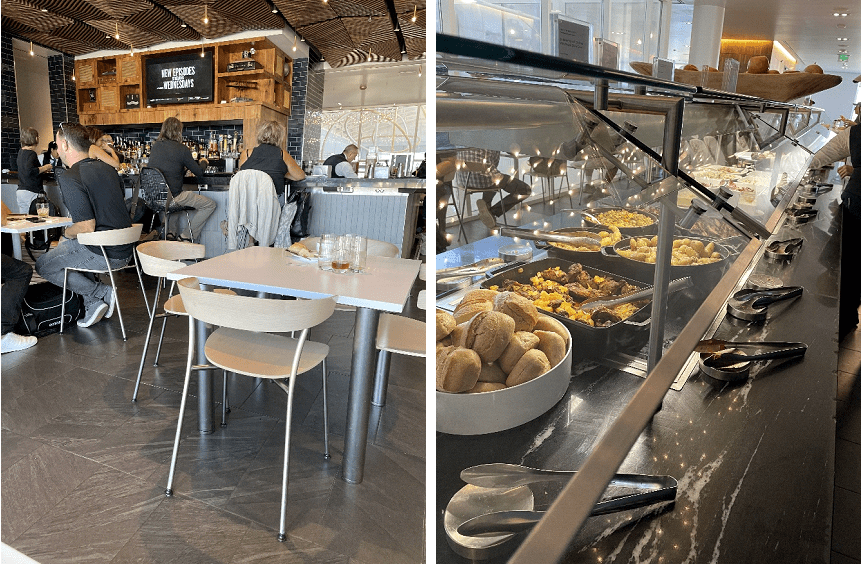
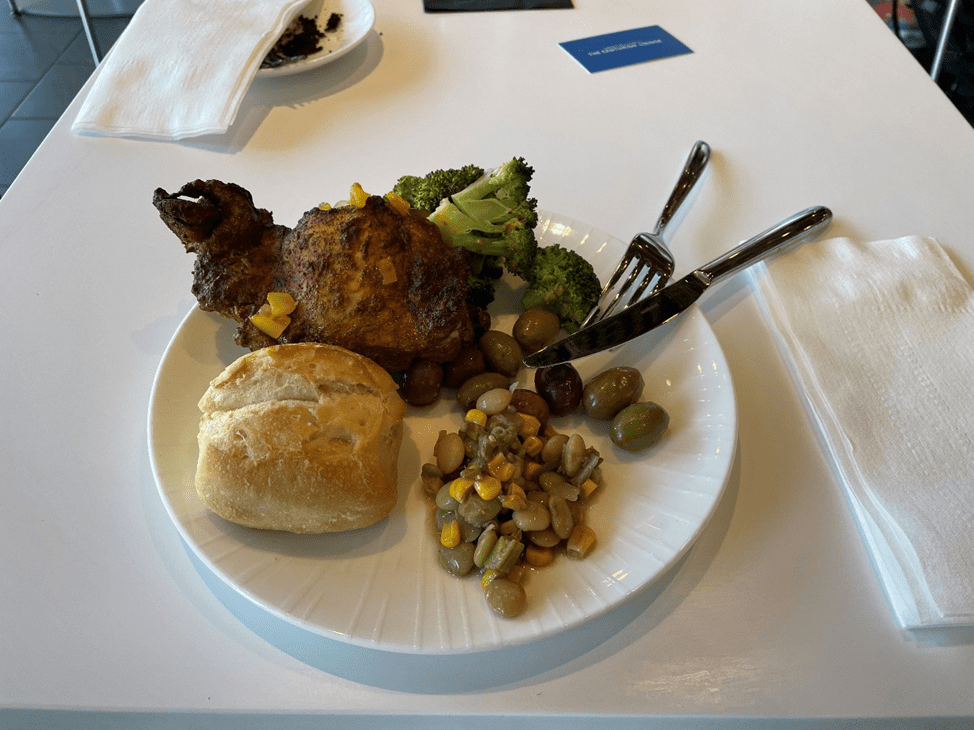
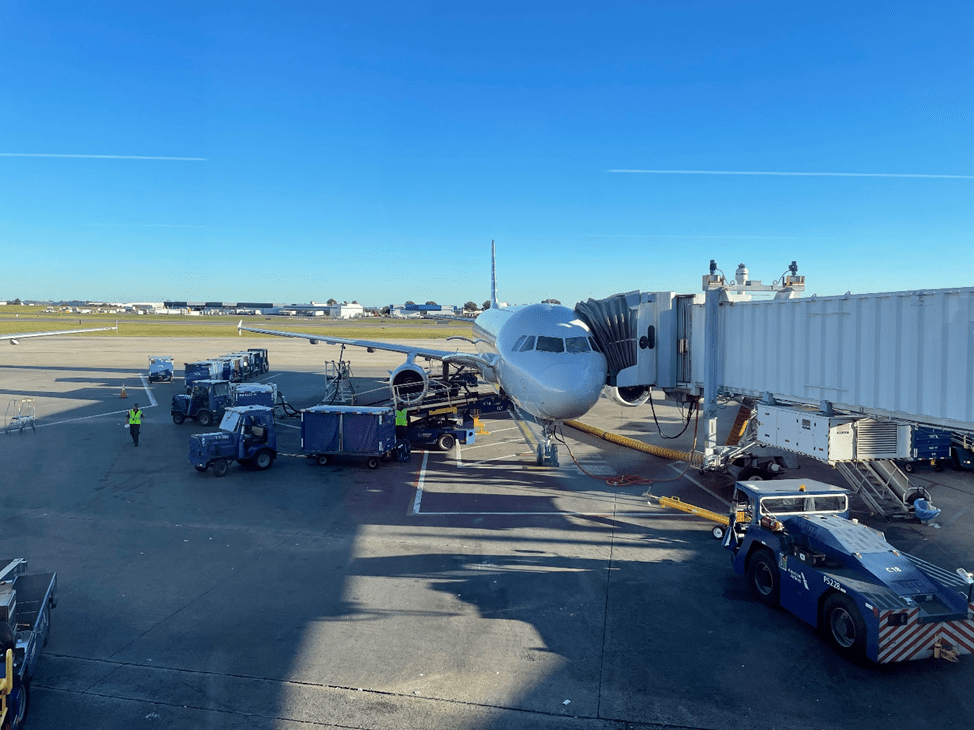
After my stay in the lounge, I meandered to my next flight, which was also operated by an A321.
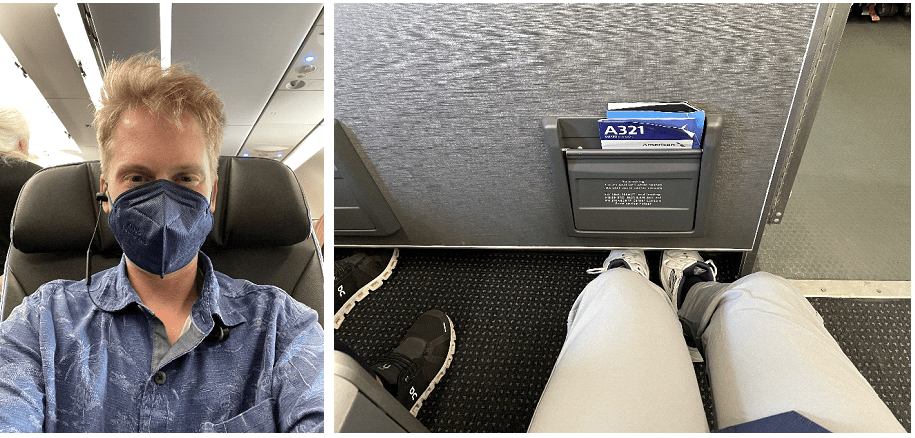
I selected the same seat for this flight: 1C, and the seat and legroom was virtually identical, as is expected.
Unlike the short first flight, this flight actually had a meal service. Amazingly, they even had menu cards for the flight. I had ordered a special meal: the Asian Vegetarian meal, just to try it out, and because I didn’t want to be stuck without a meal on this flight.
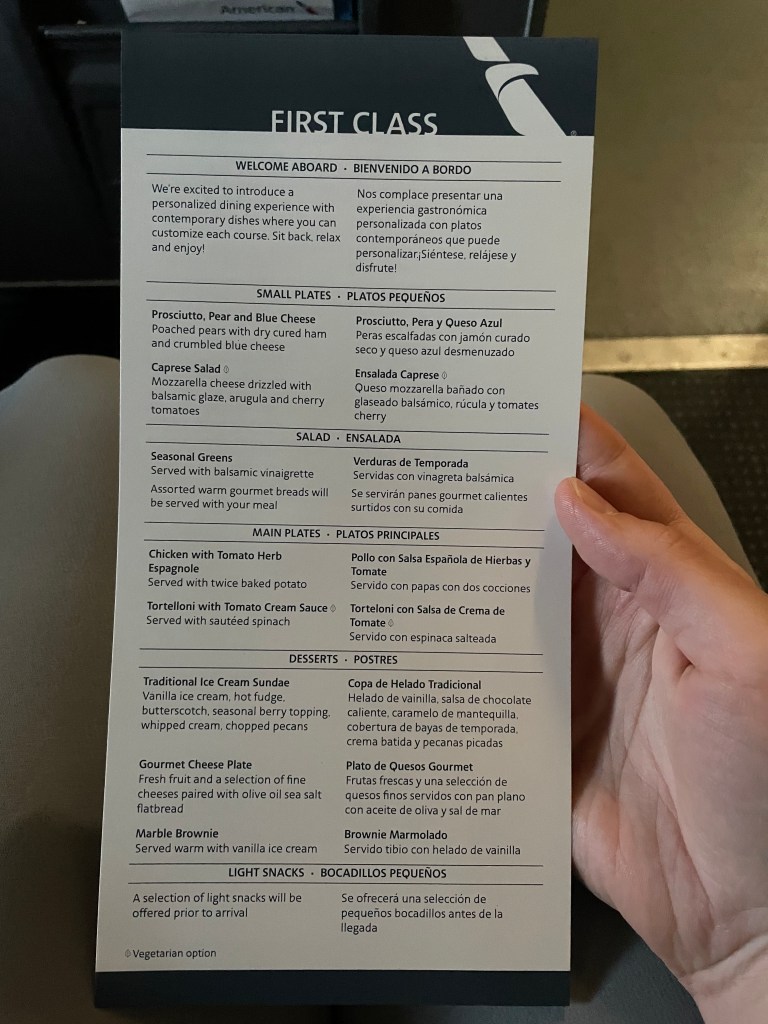
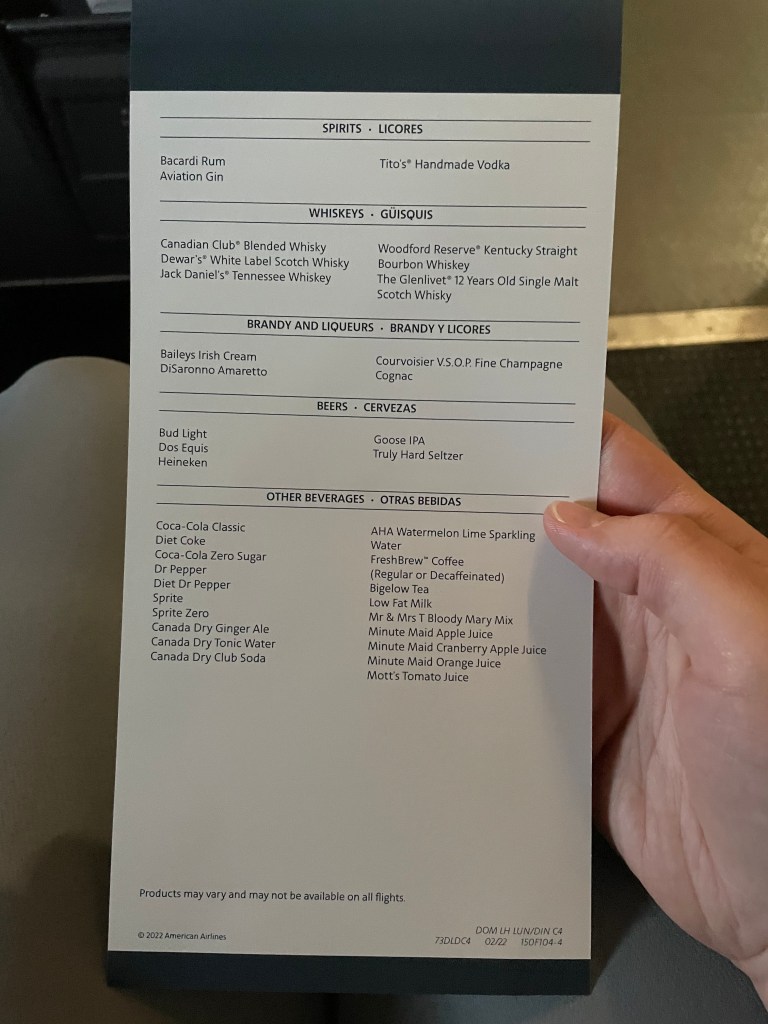
The menu cards were informative but didn’t fully reflect my special meal. Specifically, since it was Asian vegetarian, my small plates lacked the cheese dishes, which I would’ve enjoyed (at least in theory). If I took this flight again, I probably wouldn’t take a special meal simply because I didn’t actually need the food, given how good the food in the Centurion lounge was.
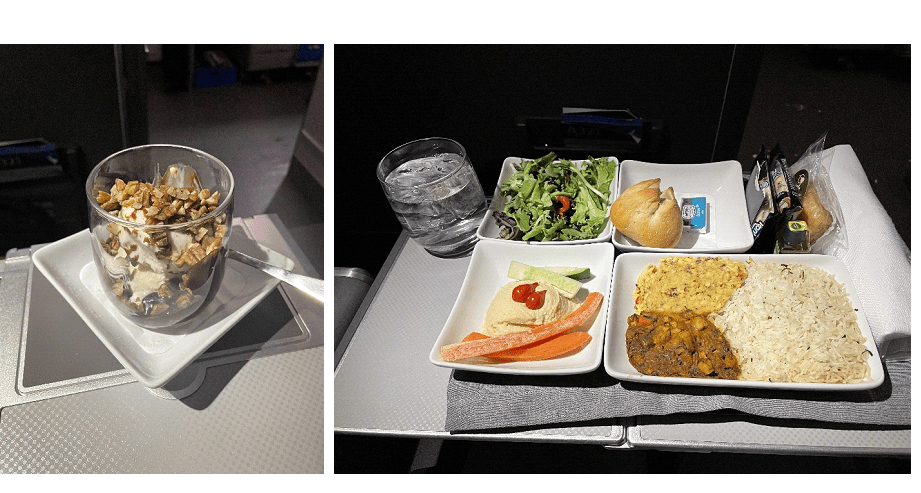
I asked to delay my meal since I had eaten in the lounge. So, I actually started the meal with the dessert. The sundae was a lot of fun and a welcome surprise on a non-Flagship service. I’ve never had bad ice cream on a flight, and this was no exception.
Since I waited so long for my meal, by the time it was served, it was somewhat crisp as if it had been sitting on a buffet for an extended period (which is reasonably expected). The food itself was well-spiced and appropriately cooked. The small plates were substantially less exciting than those on the regular menu, with the salad basically being a plate of lettuce. The hummus plate was a good idea and reasonably well-executed, but it didn’t really fit with the Asian-style main dish in my opinion.
The rest of the flight proceeded as expected. It would be nice if American had seatback TVs in First Class, like they do on their ‘Extended Over Water’ aircraft they usually use for short-haul international business class flights (e.g. to Colombia). The streaming entertainment options and WiFi worked very well, however.
In summary, this standard (non-premium) transcontinental journey was mildly more than a typical domestic flight. Having the same type of plane for two flights of such vastly different duration was fascinating, but the experiences did not really differ substantially. The main difference really was the sheer length of the Charlotte to SF flight. The ground experience in Richmond was a bit lackluster due to the small size of the gate area, but that’s a Richmond Airport problem. The ground experience in Charlotte was much improved, but that’s mostly thanks to Amex and not American. The lack of Flagship lounge in Charlotte is unfortunate, but understandable given the customer base (3/5). American’s First Class recliner is unremarkable (3/5). The service offering on the short flight was minimal as per usual, but getting a proper welcome drink was nice. I was impressed with the main dish of the special meal offered on the flight, even though I wasn’t hungry, but the smaller dishes were lackluster (3/5). The service was solid and consistent (4/5). The lack of a seatback TV is annoying for a flight of this duration, but the WiFi and streaming entertainment worked well (3/5). Overall, these flights were standard domestic flights in the US; the transcontinental flight was just very long (16/25).
I paid around $700 for this domestic First Class ticket on my Amex Platinum card (5x points/$), which earned me 3 600 Amex points. I credited the trip to British Airways, which earned me 40 + 140 tier points and 1 250 + 5 740 Avios. The total points earned are worth around $145, for a return of around 20%, which is solid, and the 180 tier points is a great earn rate.
 Michael's travel blog
7 thoughts on “Transcontinental flight but no premium service perks: AA flight RIC-CLT-SFO”