At the end of my trip to the US in April, I needed to get from Los Angeles to London. The disastrous passport control queues at London’s Heathrow Airport have been making headlines for the last couple months, but Krister had had a relatively quick experience (around 30 minutes) after his flight from New York to London because it was only the third arriving flight of the day. In the hopes of replicating this experience, I aimed to get to the UK as early as possible, which meant getting on that same flight from New York to London; spoiler: I had a (still substantially below average) 90-minute wait because they weren’t operating the same number of lanes as Krister had had. But I tried, at least.
To make this happen, I needed to get to New York in time for the 6 pm flight (AA100), which meant I was on American’s 8 am transcontinental service from Los Angeles (AA34). I considered taking (and in retrospect maybe should have taken) the 9 am service (AA2) for the later departure, shorter total travel time, and fun flight number, but I didn’t want a 40-minute layover in New York.
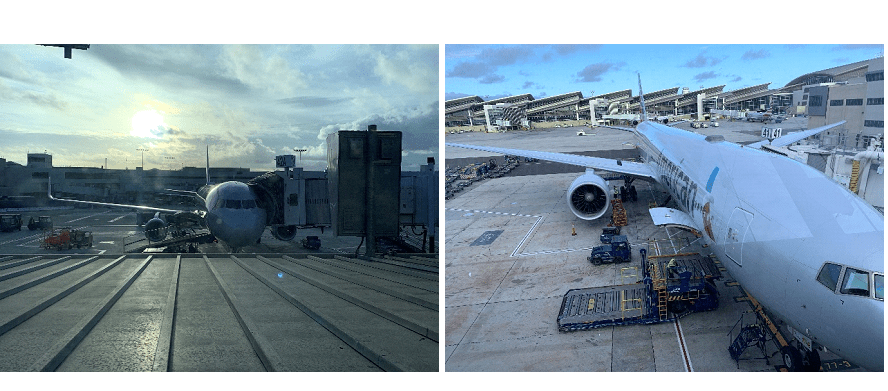
One of my best friends, Alex, dropped me off at LAX’s terminal 4, right outside the Flagship First check-in area. LAX is a really cool airport to fly from because Oneworld Emerald passengers and Flagship First customers have an exclusive entrance to the terminal from the curb. Once checked-in, I was escorted to the front of the TSA Pre-Check line and passed through quickly. Given the importance of the LAX-JFK route (and the sparse number of premium morning flights), the aircraft was parked directly opposite the Flagship Lounge/Admirals Club.
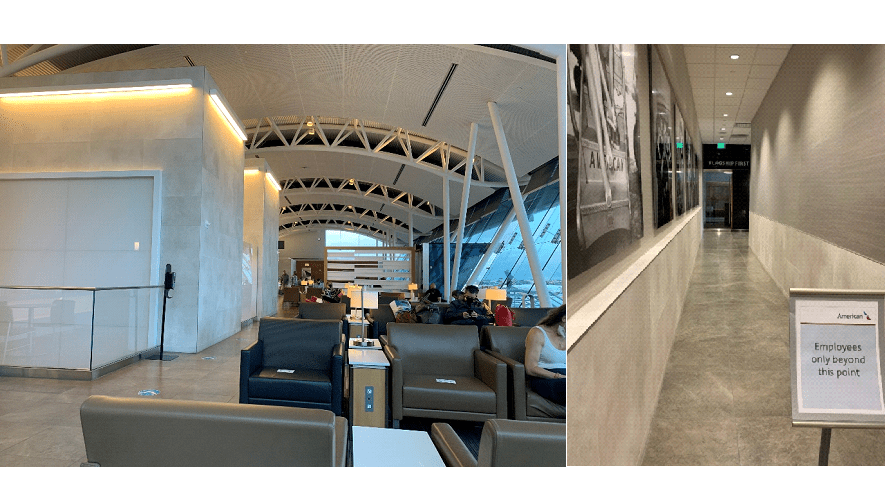
Normally, one of the big draws of Flagship First is access to Flagship First dining, but it’s currently closed. The Flagship lounge area was open, but its service was reduced to standard Admirals Club service. I knew this coming in and so didn’t arrive early.
The AA A321T is a very unique aircraft, which holds only 102 people in a three-class configuration, with 10 Flagship First and 20 Flagship Business seats (and 36 each in Main Cabin Extra/Main Cabin). I checked the seat map shortly before boarding, and all the seats were taken except for 4 Flagship First seats. One thing I find very interesting is that this aircraft actually has more Flagship First seats than the other aircraft offering Flagship First, the 777-300ER (which has 8 such seats out of 304). Given the low density of the A321T, boarding the plane is relatively quick, with boarding beginning only 30 minutes before scheduled departure time. As a Flagship First passenger, I had group 1 boarding, but I decided to board near the end, as I usually do.
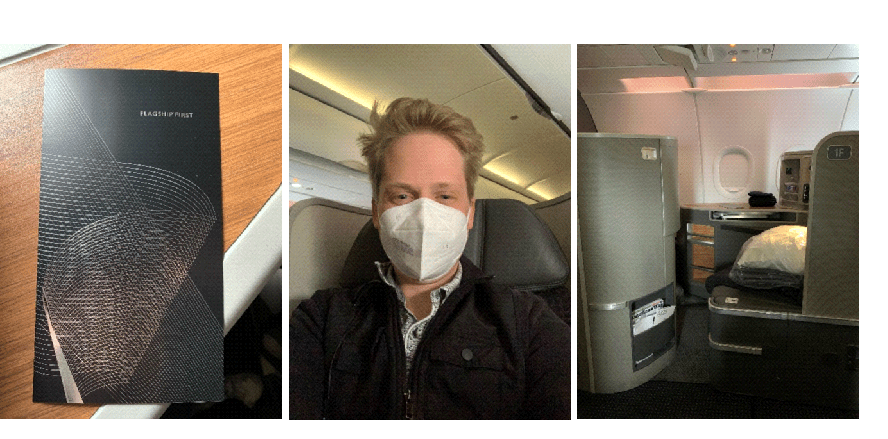
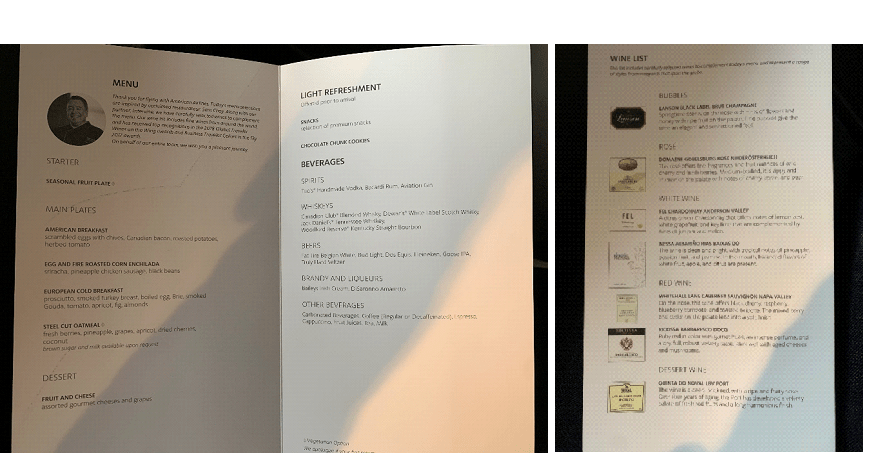
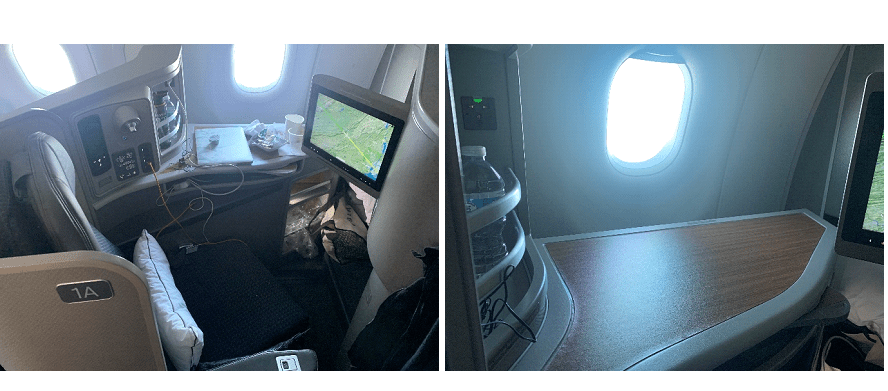
The A321T Flagship First seat is very similar to the Flagship Business class seat found on the 777-300ER, as well as in the business class of many other airlines. Waiting for me at my seat was the typical Casper bedding pack, as well as a Flagship First menu.
Pre-COVID, the Flagship First meal was simply the Flagship Business class meal but with a soup course and (slightly?) larger portions. During COVID, the meals are the same. However, they have returned to printing off a real Flagship First menu, rather than giving everyone a Flagship Business labelled menu, like they had been doing previously.
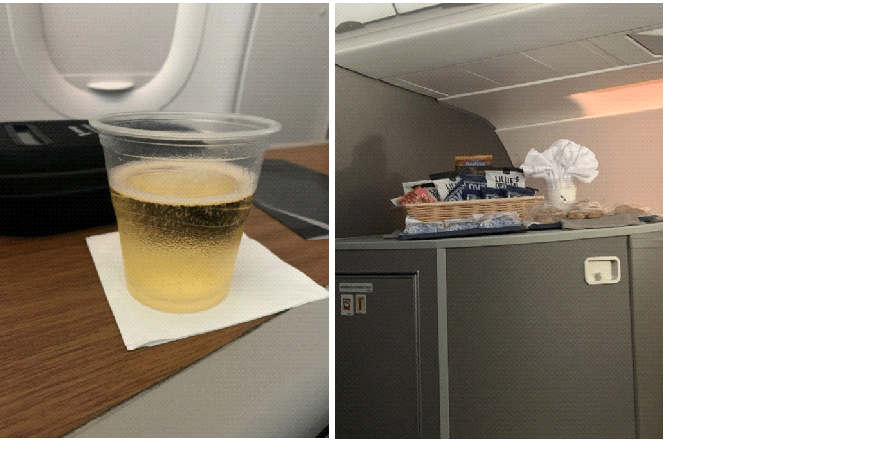
I was offered a pre-departure beverage on the flight, which was a nice surprise. The flight attendant also confirmed my pre-selected meal choice of a breakfast enchilada. I went for a glass plastic cup of the Lanson Black Label Brut Champagne. Even Pre-COVID, American served pre-departure beverages in plastic cups, so this wasn’t a surprise. What was a fun surprise, though, was that the pilot came out to thank the first class cabin for flying with them that morning. Los Angeles Airport, like other major intercontinental airports, was substantially less busy than pre-pandemic, which stands in stark contrast to Dallas-Fort Worth, which was very busy. After an on-time pushback, we had a short taxi to the runway and were soon on our way.
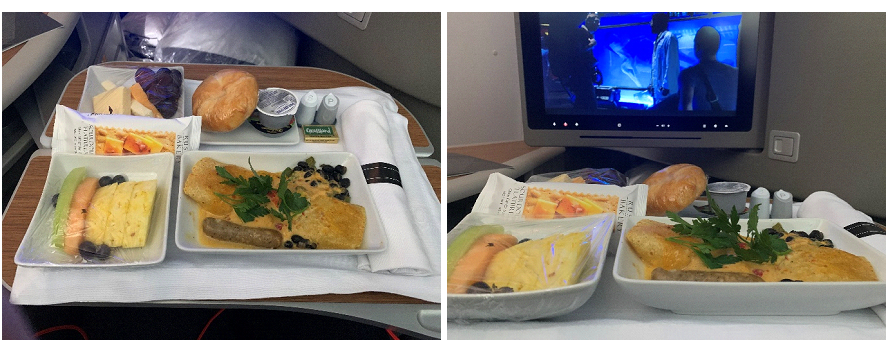
Shortly after takeoff, I was brought my meal, which was served all on one tray, like the business class meals (which this was the same as). I don’t think breakfast would’ve come with a soup course pre-pandemic, so I don’t think I was missing out on anything, except having the dishes served in courses.
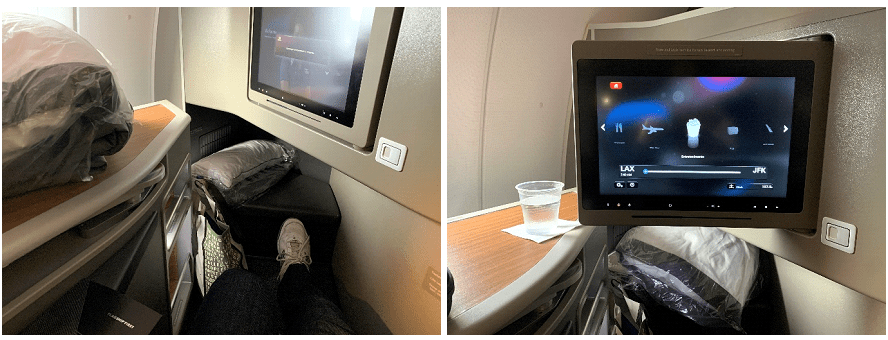
One thing that I noted about these flights, compared to my flights last fall is that, while the selection of new movies is very limited, the overall selection has improved substantially, with many more classic movies being offered.
Given the relatively early departure time, I took a nap shortly after breakfast. I managed to sleep for around 90 minutes, which was quite nice. The flight was relatively short (4:30) for a transcontinental service because we had a tail wind of 100 mph, so we landed about 45 minutes early (I probably should’ve taken the 9 am flight). As we were getting ready to land, there was an announcement made that for “passengers connecting to London, your gate is gate 2”. Maybe I wasn’t the only one doing this connection, but I was the only one in first class connecting to London because I was the only person on the next flight’s first class.
I have no particular complaints about this surprisingly short flight across the US. Everything went well but was lacking any elements that would’ve made this class particularly first class. The seat was definitely an upgrade over the business class seat, and looks quite swanky on a narrow-body. However, this seat is no better than getting a seat in business class on United’s 787 flight across the country, despite the higher price tag (4/5). The Admirals Club in LA was bright and airy, but given California’s relatively strict COVID rules, the prepackaged food had to be handed to us, which was a bit strange (3/5). I’m looking forward to the Flagship Lounges reopening. I love a good breakfast enchilada, so no complaints there, but the cheese platter was very basic (4/5). The service was fine, but didn’t feel particularly first class, but I did enjoy being welcomed aboard by the pilot (4/5). The inflight entertainment was solid– it’s uncommon to get a seatback screen on American on a domestic flight, but no free WiFi in first class is a bummer (4/5). Overall, this transcon flight gets a 19/25, which is a solid score, but doesn’t necessarily scream first class to me.
Like Krister and my flight to Dallas, this flight was booked as an award flight, in this case as part of the itinerary from LAX – LHR. Given the lack of demand for flights from the US to the UK, saver AAwards were available at all levels: 30k for economy, 48k for premium economy, 57.5k for business and 78k for first class. A paid economy ticket would’ve cost around $1080. American Airlines uses married segment logic for its pricing, and so a connecting flight is often cheaper than a direct flight. If I had just booked the flight from LAX – JFK, it would’ve been 66 000 miles, and the JFK – LHR flight costs the same as the LAX – LHR flight (because of the flat rate from USA – UK).
I used 78 000 American miles, which is over 50% more than the first class flight from London to Dallas, but the cash component was only $5.60, instead of > $600 (and no companion voucher was needed). Based on the valuations I’ve read online, 78 000 AA miles is worth about $1 170. American Airlines currently has a sale on miles (40% off), so I was able to purchase the miles for about $0.019/mile. To redeem this ticket, I transferred 60 000 Marriott points into 25 000 AA miles (in this specific case, this corresponded to a value of $0.008/point, which is approximately their expected value, based on what I’ve read). And then I purchased the remaining 53 000 miles using their promotion. Given that a one-way economy ticket was going for $1080, the ~$1025 I spent on points seemed reasonable to me. I like to think about it as if I paid for an economy ticket and then used the 60k Marriott points to upgrade to Flagship First.


19 thoughts on “The one true domestic first class in the US: American Airlines’ Flagship First service from LAX to JFK”