After returning from my trip to DC, I had a couple weeks off from travel before I had another trip… to DC (and Boston). This time, however, I ended up just flying Alaska Airlines both ways in economy. I actually had another Flagship First ticket booked for the way back, but I ended up deciding to stay longer in DC and fly back direct, rather than spending all the additional time getting to and transiting JFK after my last (very long) layover experience. I know, that’s pretty unlike me, but sometimes it does happen.
This trip consisted of four flights: SFO-DCA on Alaska, DCA-BOS (and back) on American, and then DCA-SFO on Alaska in the span of 5 days. On zero (0) of these flights did I clear an upgrade, but I did sit in exit row seats on each flight. I did enjoy, however, the opportunity to hang out at the Alaska Airlines lounge at SFO, the American Airlines Admirals Club at DCA, the Chase Sapphire Lounge in Boston, and the Capital One Landing at DCA.
It’s a well-known issue in the travel blog space that reviews of economy class experiences (especially short-haul) don’t do as well as premium cabin reviews because there’s a lot less to report on, more people fly economy and so are more familiar with it, and airlines don’t do a lot to differentiate their economy products.
Contained in this trip report is an overall score for SFO-DCA and back on Alaska Airlines and a couple pictures from the American Admirals Club at DCA but in concourse C.
In January/February, Alaska Airlines paused its SFO-IAD service, which is the flight I usually take because upgrades clear more frequently. The advantage to the SFO-IAD service is that it’s usually served with a 737-900/MAX9, rather than a 737-800/MAX8 like this flight. Alaska uses its 737-900/MAX9s (and 737-800/MAX8s, respectively) extremely interchangeably, so it’s hard to know exactly which one you’ll be getting beyond -9xx or -8xx. The 737-9xx have an extra row of First Class compared to the 737-8xx aircraft, so upgrades are easier on the larger aircraft between SFO and DC in my experience.
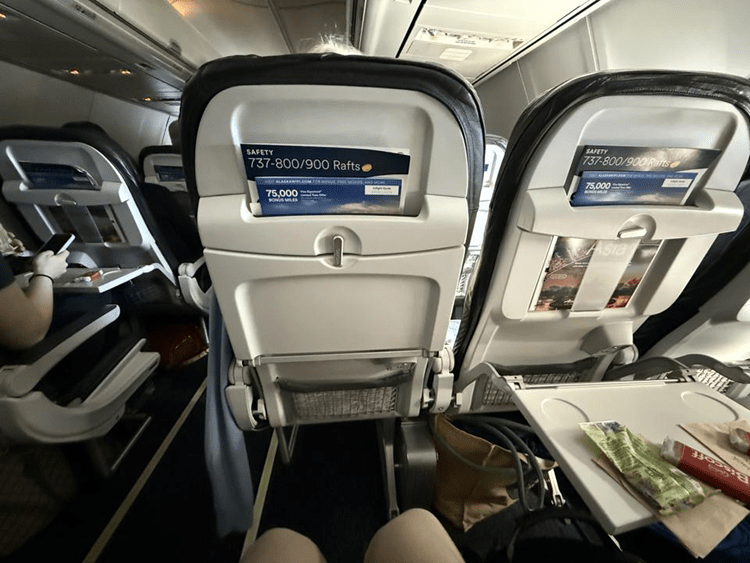
These transcontinental flights were extremely empty. I’m talking less than 60 people on the entire aircraft (which seats 159) in both directions. As a result, the seat map was fully blocked off about 4 hours before departure to ensure the aircraft was balanced correctly. In both directions, I got an exit row seat with an empty middle.
Despite the flights being exceptionally empty, there were no seats available in Premium Class that would’ve given me the entire row (or guaranteed an empty middle) in either direction, so I opted instead for the exit row. The only loss was no free alcoholic drinks, but neither of these flights was timed well for drinking.
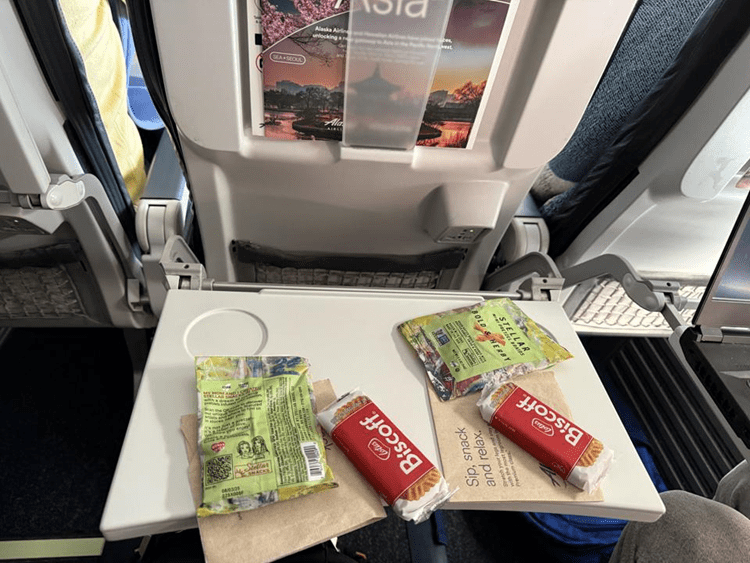
In both directions, a drink and snack service went through shortly after takeoff. In the westbound direction, an additional service was offered mid-flight, likely because the first service was so quick that the flight attendants didn’t have much else to do. In both directions, an additional drink service occurred around 90 minutes before landing.
I didn’t realize how bad this selfie turned out until I started writing this article, but here’s the obligatory selfie:
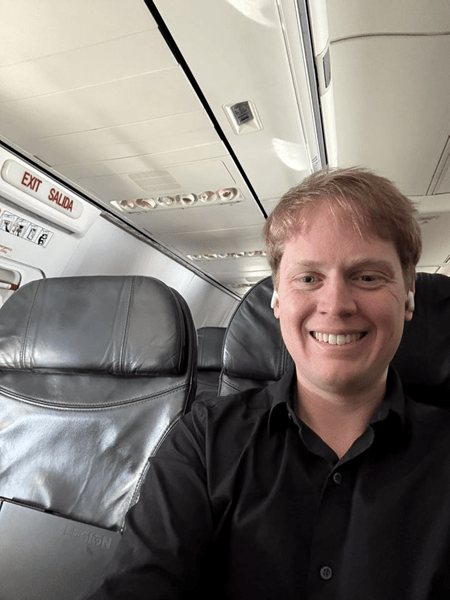
I’d like to say that’s the fake smile of someone having to fly coach, but an empty middle seat in an exit row seat is basically just European-style Business Class, which I’m very used to. I didn’t get a meal, but the flight did operate between meal times (and I ate in the lounge anyway).
Shockingly for me, I didn’t actually get any pictures of the flights to and from Boston, so the only pictures I have to report are of the Admirals Club in Concourse C at DCA. This club is effectively a satellite of the large club by the E gates that has the new design. This smaller club is pretty much just a single circular room with a pair of bathrooms.
The buffet was very similar to the buffet on offer at the larger club (but smaller in scale) and made up one of the walls.
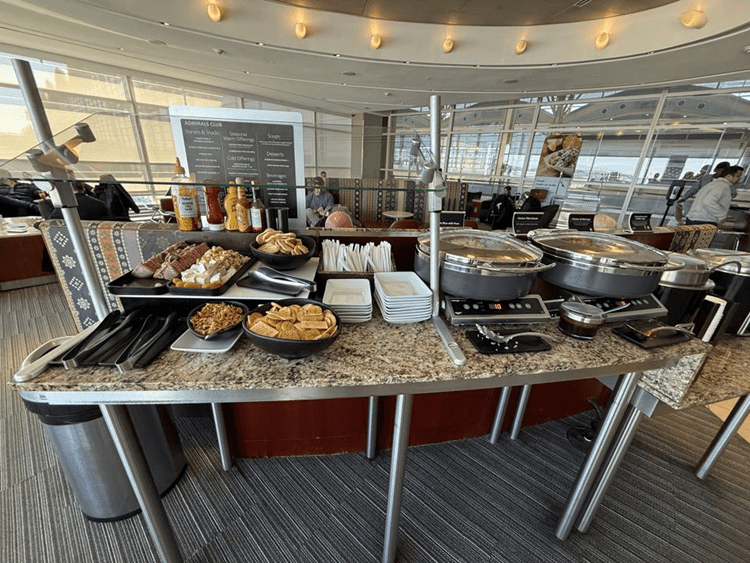
The main thing that this club offered was a quiet place to sit that was near my gate for my flight to Boston. That’s really it. DCA is an important business airport, but the vast majority of flights are short and meant to be commuter-style flights focusing on professional travelers, who don’t usually spend large amounts of time in the airport.
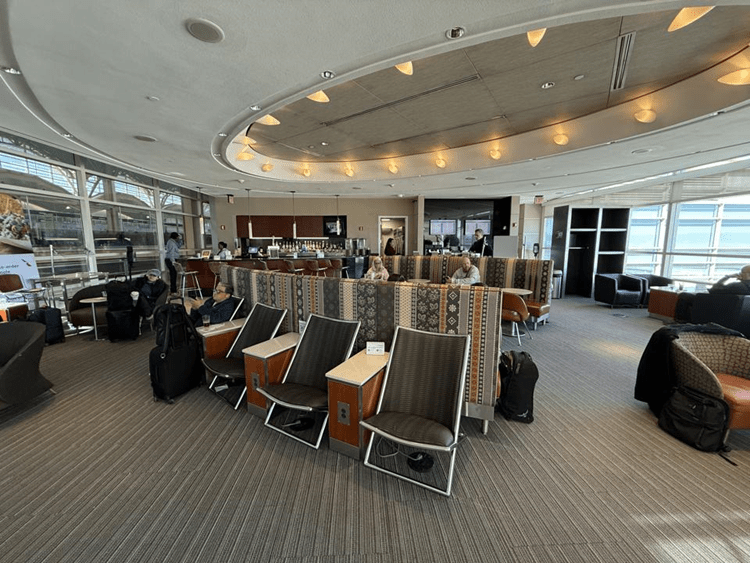
In the above picture, you can actually see the check-in hall out the left-side window.
All the pictures in this article could really be from just about any generic short-haul flight in the United States, so I figured I’d just round them all up into 1 article, especially since they all receive the same overall score.
In summary, flying domestically in the United States in Economy Class in February is a perfectly average time to fly. The airports aren’t too busy, and there isn’t a lot of inflight service to speak of. The average ground experience for these flights came out to be a 3.5/5. The average exit row seat score came out as a 3.5/5 (3 transcon, 4 short-haul). The service on all the flights was the standard coach experience (3/5). The inflight food and drinks offerings were minimal, though American Airlines does offer alcohol to those sitting in the exit row because it’s considered Main Cabin Extra for them (unlike Alaska) (2/5 on Alaska; 3/5 on American). The IFE on both airlines was just streaming entertainment and (paid) WiFi, but at least the price is reasonable on Alaska (3/5). Overall, the transcontinental flights get a 15/25 (and the American flights get a 16/25).
 Michael's travel blog
One thought on “Alaska to DCA, both ways in economy”