After returning from the East Coast, I didn’t even make it two weeks before it was time to fly again. This trip was just a short weekend trip to Los Angeles. I booked it the night before the flight, so as soon as I paid for the ticket, it was time to check in. The flight I wanted to take was about $50 more expensive than the morning flight that day, but the same-day change fee for flights within CA is only $25, so I figured I’d still save $25 by doing the change. I learned something interesting: on Alaska Airlines, when you book a flight less than 24 hours in advance, if you do a same-day change, that same-day change is free. So, I saved the full $50! I repeated the process on the way back as well.
Indirectly related to this trip, the American Airlines status year runs from March 1 – February 28, rather than being just a calendar year. At the beginning of 2025, I was about 20 000 loyalty points shy of upgrading status from Platinum (Oneworld Sapphire) to Platinum Pro (Oneworld Emerald). I looked into how to close that gap given the time I had remaining, and it looked like the easiest way to do it would be just to pick up the AAdvantage Executive Card, which just for having the card, will give you 20 000 loyalty points as boosts. Given how much value I’d gotten out of the free upgrades on SFO-IAD in 2024, upgrading my status made a lot of sense to me. The main reason most people get this card is that it gives the cardholder an Admirals Club membership. I don’t actually need a membership because I still have BA Gold Status until March 2026, but it does save me like 30-60s every time I go to an Admirals Club because I don’t have to give them by BA card number.
The bigger perk of it, for my travel purposes, is that the Admirals Club membership also gives me access to Alaska Airlines lounges. I will note that BA Gold does also give me access to the lounges, but Alaksa enforces a requirement of having my BA number on the booking. That restriction in the past meant that if I booked an economy seat, I had to pick between Alaska lounge access and a chance at an upgrade. This rarely came up in practice but was annoying.
But as we’ll see in this review, that’s no longer a problem for me! So even though the short flights to/from LA in this review are probably not the most interesting, this review gives me the opportunity to review the new Alaska Lounge at SFO! The old lounge was in Terminal 2 and is currently sitting vacant.
Alaska Airlines considers SFO to be one of its hubs, so let’s see how this new hub lounge holds up.
The Alaska lounge entrance is very classy, but very empty because everything is on the upper floor. It seems to me like they could do something with this lower level.
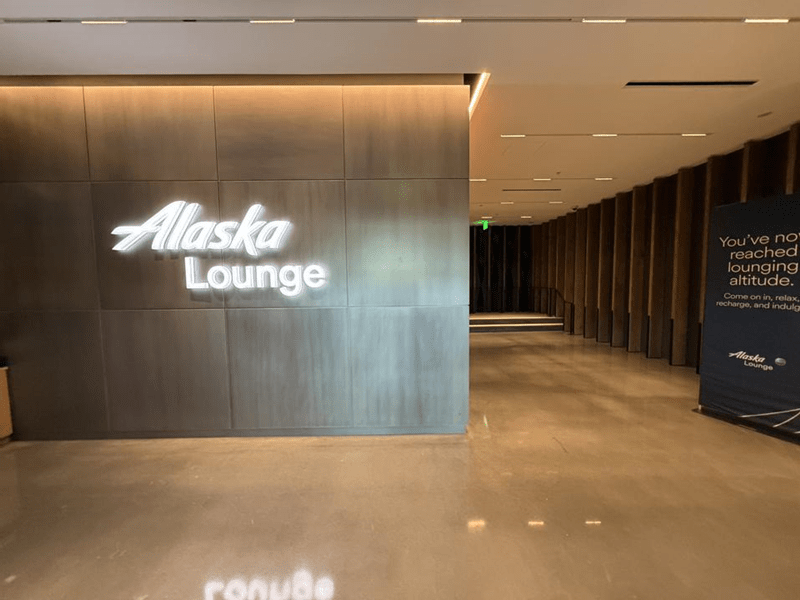
Once you’re upstairs and checked in, you can either turn left to the dining area or right to the business/lounging area. I pretty much exclusively use the dining area, but I did use the business areas’ phone booths once.
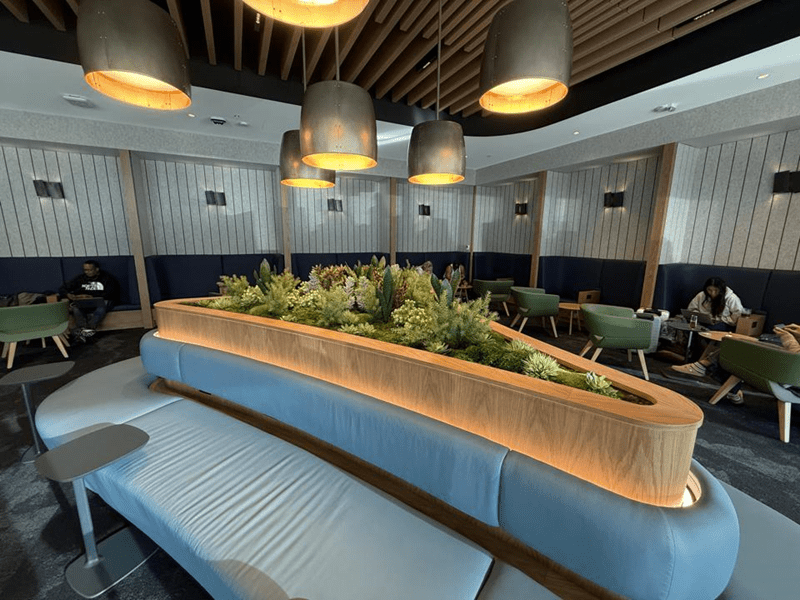
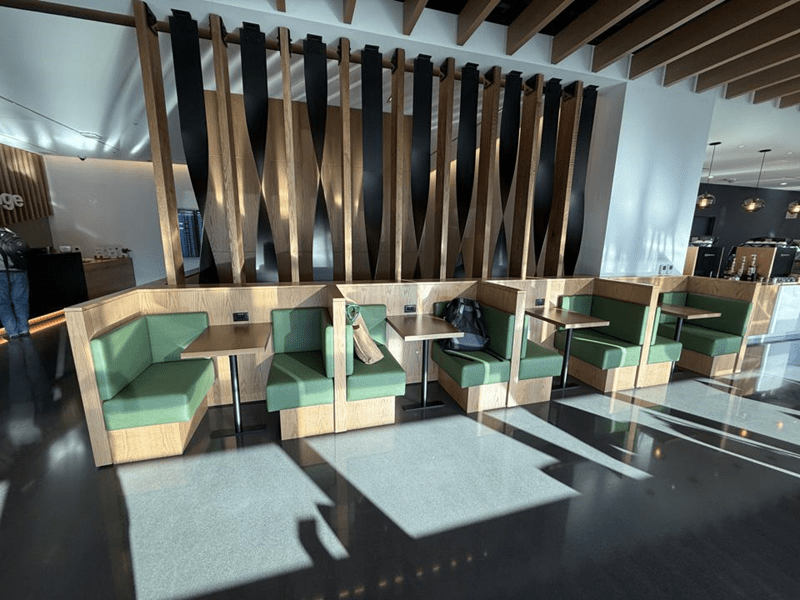
This area offers several types of seating, which are all comfortable depending what you’re looking for during your visit.
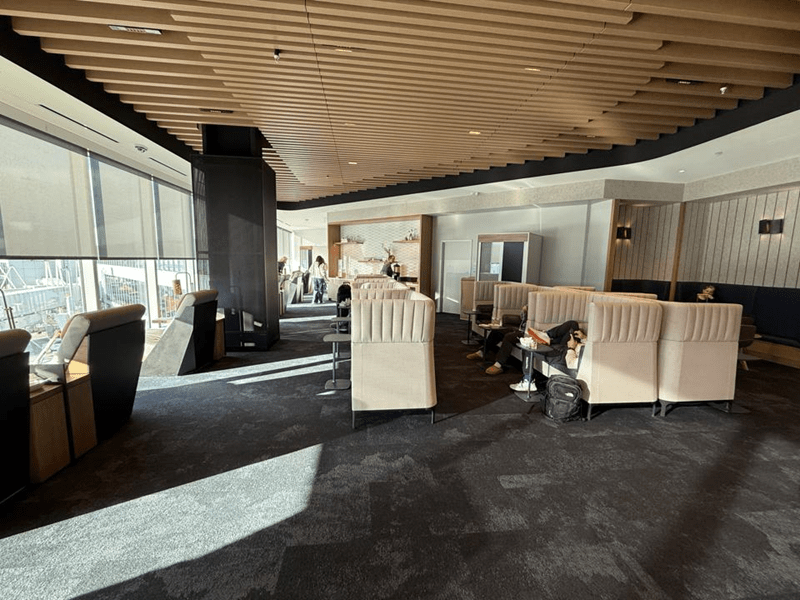
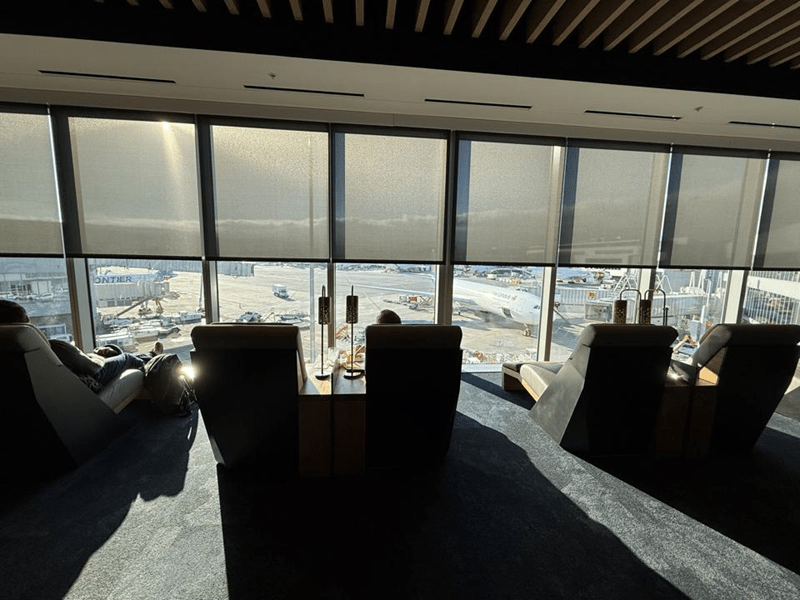
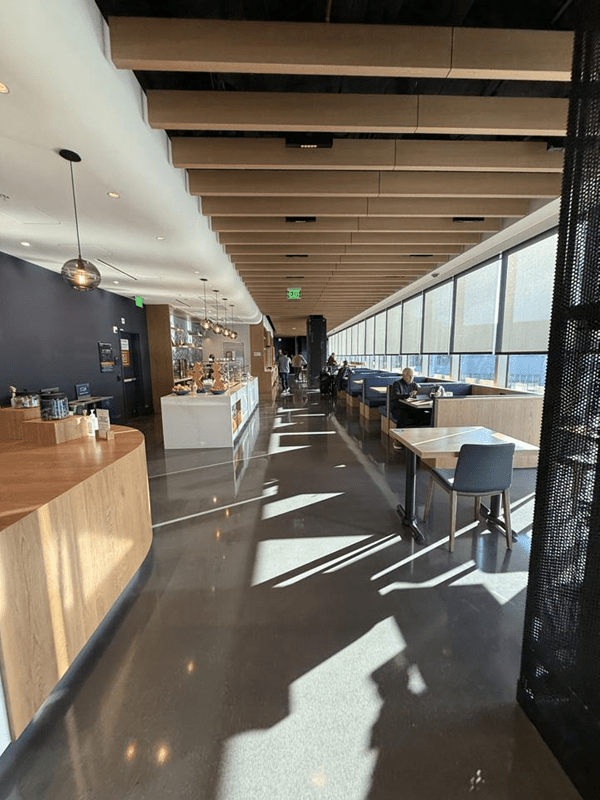
Heading the other way leads you to food.
Continuing past the first set of booths is a barista and then the buffet.
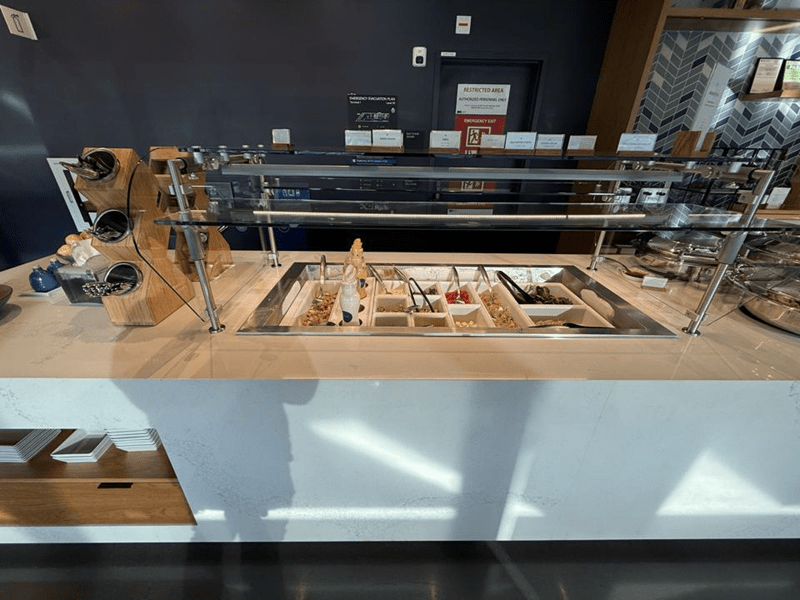
The buffet varies by the time of day. This flight was in the early afternoon, so it was set up as post-lunch all-day dining. The various times I’ve been there, it’s been set up as “build your own __”. Options that I’ve seen include breakfast tacos, regular tacos, and pho.
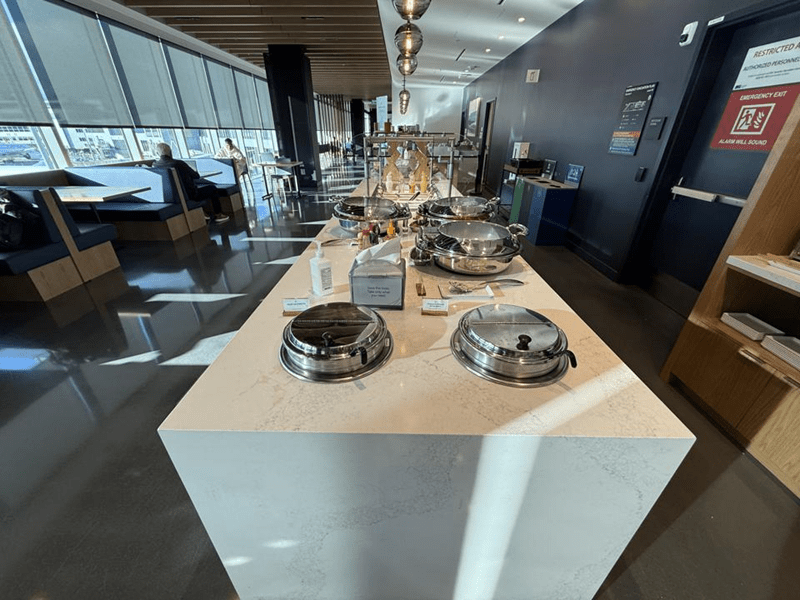
The buffet also includes soup options (or oatmeal in the morning).
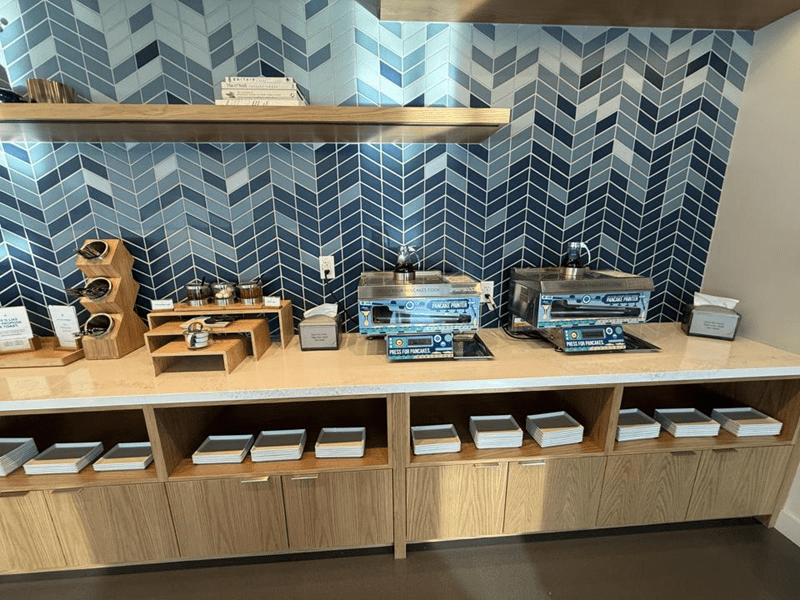
And it wouldn’t be an Alaska lounge without pancakes. Also in this area is sometimes local sourdough bread.
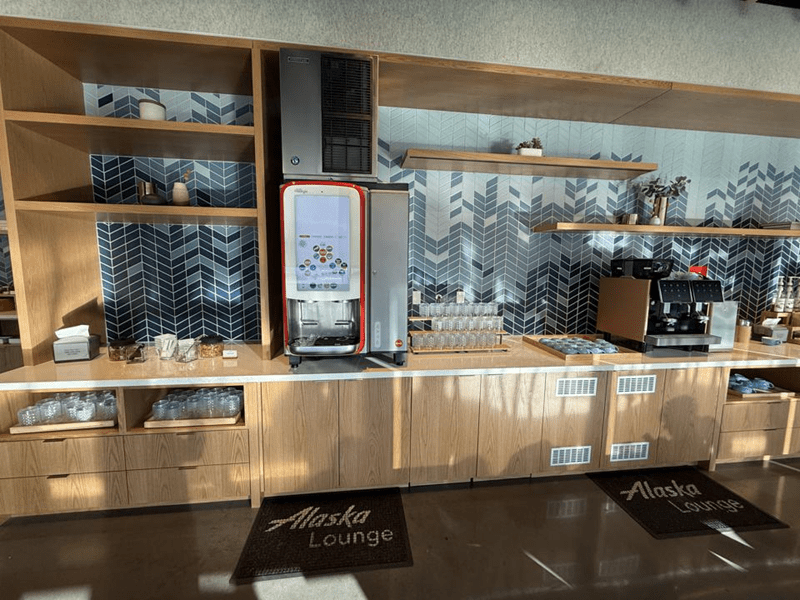
Next up came the drink area, which includes automatic coffee machines and an all-beverage machine.
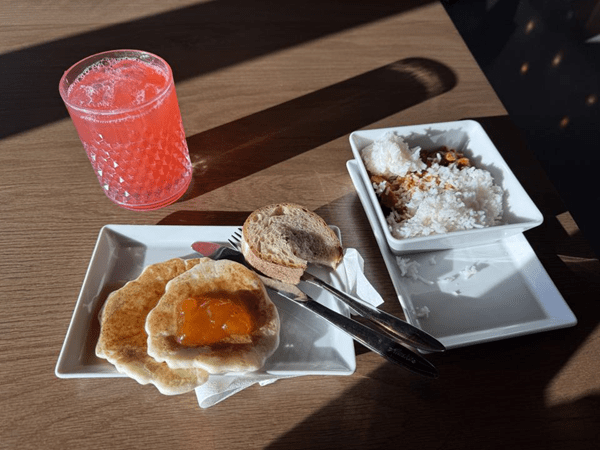
I decided to get a selection of offerings, including pancakes, bread, strawberry lemonade, and curry that I failed to plate nicely.
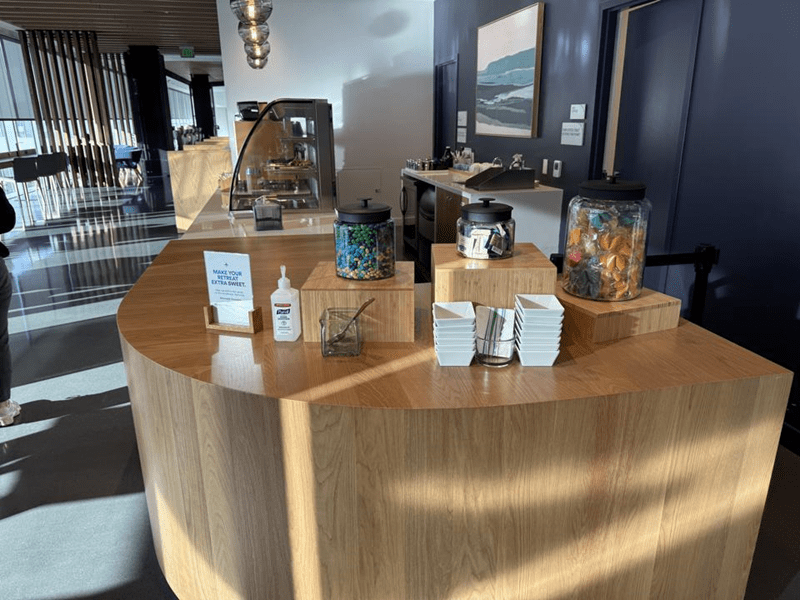
Alaska Airlines tries to add a local flair to its lounges, and in this lounge, the local offerings are the sourdough bread, Jelly Belly jelly beans, Ghirardelli chocolate, and fortune cookies (from Oakland).
About an hour after I arrived, it was time to head to my plane. The flight in both directions was pretty short, so this next part will cover the two flights from SFO to LAX and back. I decided to do it this way because economy flights tend to be unexciting, and this continues my series on testing if mainline service and regional service is really any different. Spoiler: so far, it’s really not. The other consideration that these two flights close together lets me explore is if an upgrade on this type of flight is actually worth paying for. Long time readers will know that I used to (almost) always buy upgrades on these short flights because I could buy 30 additional BA tier points for $40-$50, which was a great deal for maintaining status.
My flight on the way down was operated by an E175 that was parked at B7, right near the lounge.
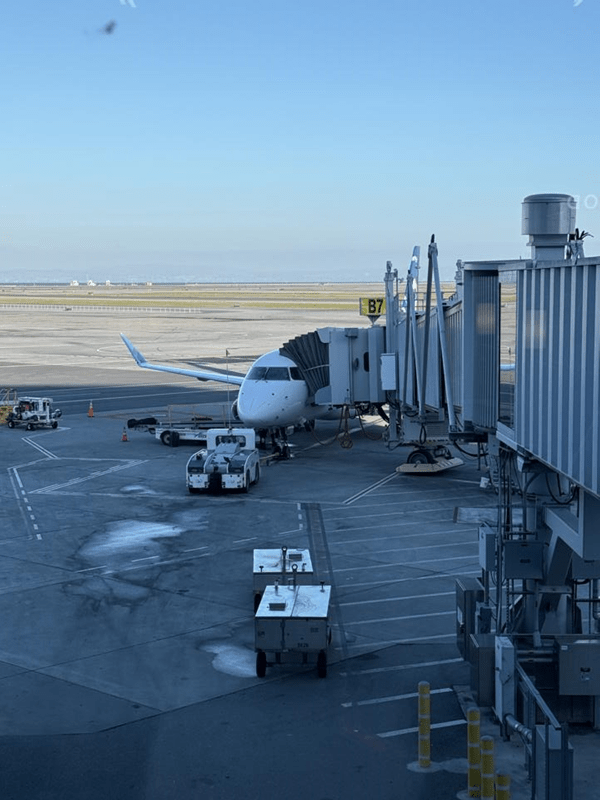
I did not clear an upgrade on the flight down, but given how close in my booking was, this did not surprise me at all. It’s well-documented all over the travel blog space that complimentary upgrades are getting harder to come by because airlines are actually selling their first class seats. I’ve had a pretty good upgrade rate with mid-tier status on both United and American, but my upgrade rate has also been somewhat lower than it could be recently because I keep booking flights without much notice. I have a much higher upgrade rate on the return leg of bookings compared to the outbound as a result of this trend.
I didn’t have much with me in the way of luggage, so I didn’t really have a specific time I needed board, so I did my standard approach and boarded toward the end.
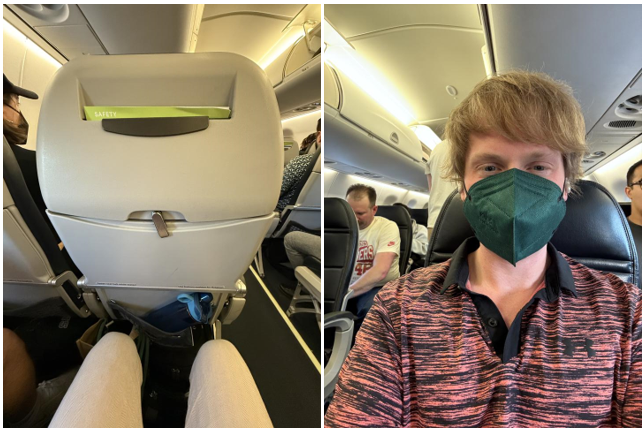
I settled into my regular economy seat. Not only had I booked so late that I couldn’t clear an upgrade to first class but I couldn’t even select an extra legroom seat because they were all taken. That being said, the fight was an hour and the legroom was plenty for me. This aircraft’s 2-2 configuration with 30”of pitch and 18.2” of width (according to Aerolopa) gives 3.8 ft2 of personal space. After takeoff, the abbreviated service began.
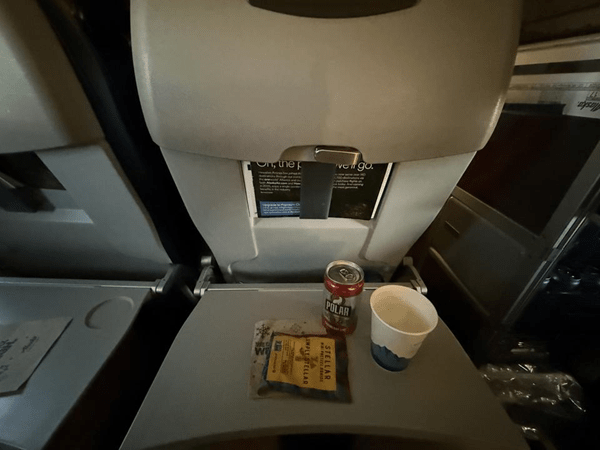
Unlike on some other flights (like San Francisco to Palm Springs), they had the full beverage offering, so although the service was fast-paced, I was able to select a lime-cranberry sparkling water and accepted the small bag of pretzels. We landed on time, and LAX’s traffic was minimal, so I was out of the airport within about 20 minutes of landing.
On the way back, I briefly stopped by Alaska’s LAX lounge. I’ve been to this lounge a couple times but apparently don’t have an actual review of it on the blog. I will fix that in the future. This lounge is noticeably smaller than SFO’s and has a bit more limited hours. It doesn’t seem to me like this lounge quite takes the “stay open until the last plane is boarding” approach that some lounges do.
As before, I waited until the end of boarding to take my seat. I really enjoy doing that when sitting in the first couple rows because it means I don’t have everyone filing past for nearly 30 minutes.

We were seated in a 2-2 configuration with 41”of pitch and 21.3” of width (according to Aerolopa) for 6.1 ft2 of personal space. Having an extra 2.3 ft2 of personal space isn’t a lot, but it’s about 60% extra space compared to the regional aircraft, which is a big percentage increase. For context, on the regional aircraft, your personal space in first class would be 5.25 ft2 (40% extra), but if you can often get the single seat, which is great when traveling solo.
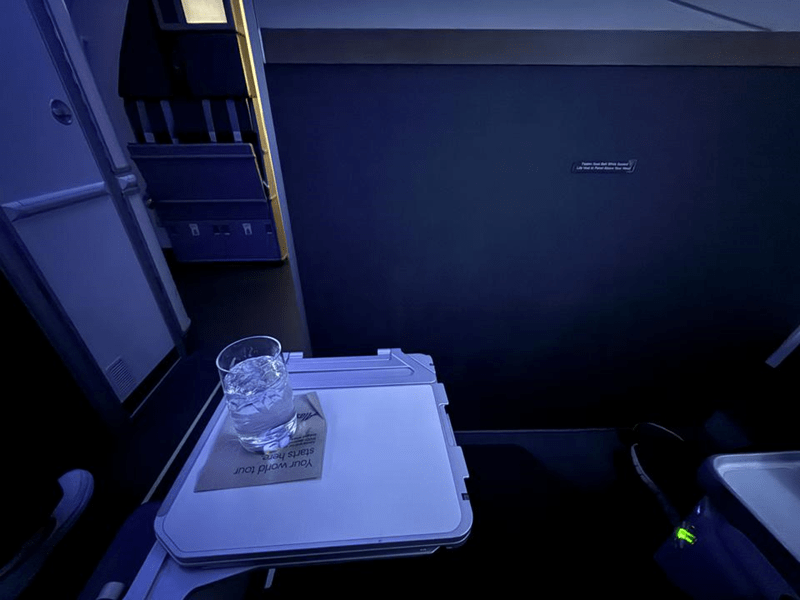
On this second short flight, they provided me with a small can of sparkling water served in a glass but did not provide a snack service, which is not the norm on this route.
In summary, my trip to LA went well. Getting a free upgrade on the way back and having a straightforward way to access Alaska and AA lounges made this trip a breeze. The Alaska ground experience in SFO is better than at LAX due to its nice new lounge (4/5 and 3/5). In both directions, the flight is short enough that seat needs are relatively minimal, but Alaska’s mainline first class seat has a great amount of space on a short flight like this one (3/5 and 4/5). The service on both flights was minimal and basically the same between the cabins. The edge here, score-wise, actually goes to the SFO-LAX leg because the service was up to economy class standards but not up to first class standards (4/5 and 3/5). The “meal” offering was minimal in both directions, but actually less on the first class leg, with only drinks being offered. I wanted my bag of popcorn (2/5 and 1/5). Finally, the inflight entertainment was the same on both flights: personal device streaming, which is perfectly fine (3/5). Overall the two flights get scores of 16/25 and 14/25, which reflects that both flights were basically the same but had different standards they were expected to meet.
Both these flights I booked last minute in discounted economy class. I used a pair of $25 discount vouchers (earned from delayed checked bags on previous flights) for these flights and paid $131 for the outbound and $111 for the return leg. American Airlines has a distance and fare class-based chart for travel on Alaska Airlines, so the points calculated as (338 miles between SFO and LAX) * (0.5 points/mile for discount economy) * (1.6 Platinum status bonus), instead of just being based on the cost of the fare. Therefore, I earned 271 miles and loyalty points on American Airlines both ways. I also earned 5x points/$ by using my Amex Platinum Card. I got an overall (average) return of just under 11%, which is low for me.
 Michael's travel blog
2 thoughts on “San Francisco to LA, two ways on Alaska Airlines”