Unlike a lot of people, I tend not to travel as much during the summer. Partially that’s because I’m busier in my non-airplane life over the summer and partially that’s because I prefer to travel during off-season when the flights are both cheaper and less busy. The means for the next post, we’re jumping from August all the way to October. It took quite a while for me to just get through April on the blog, and somehow, we’re already at October. That being said, I recognize this post is coming in February, so I still have some catching up to do.
For this post, I’m doing a short comparison of two American Airlines flights: SFO-LAX and LAX-SFO. I was invited to Southern California to go to an airshow at the Long Beach Airport. I booked this trip on American Airlines about a week in advance, and since I wasn’t needing more British Airways tier points, I just booked economy tickets, put my AA number on the booking, and hoped for upgrades. The outbound flight was on an American Airlines A319 and the return on a 737-800. The A319 is notoriously hard to clear upgrades on because it has only 8 First Class seats compared to 120 economy seats (1:15). American’s 737-800, however, has 16 First Class seats compared to 156 economy seats (about 1:10). Since my trip was only about 24 hours long, I actually cleared my upgrade on my return flight before I took my outbound flight.
On my way to LAX, I stopped by my friend Valerie’s place to walk her dog before continuing on to the airport. I managed to arrive in time to actually visit “The Club SFO” for once. Normally whenever I arrive at SFO for an American or Alaska flight (from T1), I don’t have time to wait in the long line to enter. However, this time, there was no waitlist and I had a full 30 minutes until boarding.
The entrance to The Club SFO is very prominent when you enter Terminal 1, which means it’s easy to find, but also means that it’s very far from the gates.
Upon entry into The Club, your ticket and boarding pass are scanned, and then the only place to go is up to the club floor.
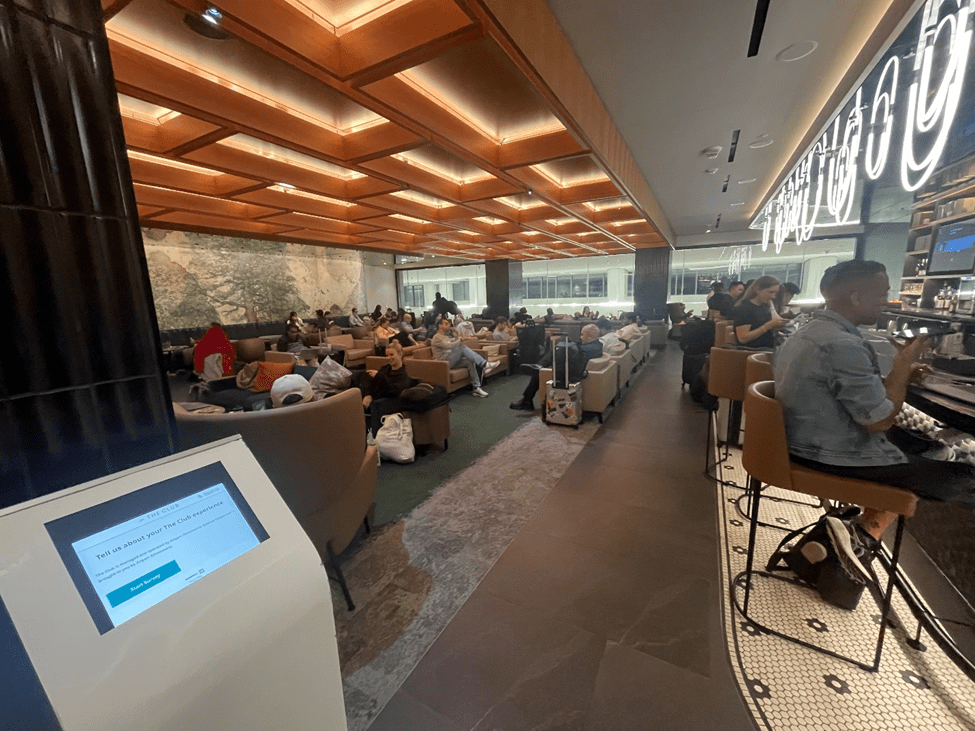
The club floor is very nicely appointed but also very busy.
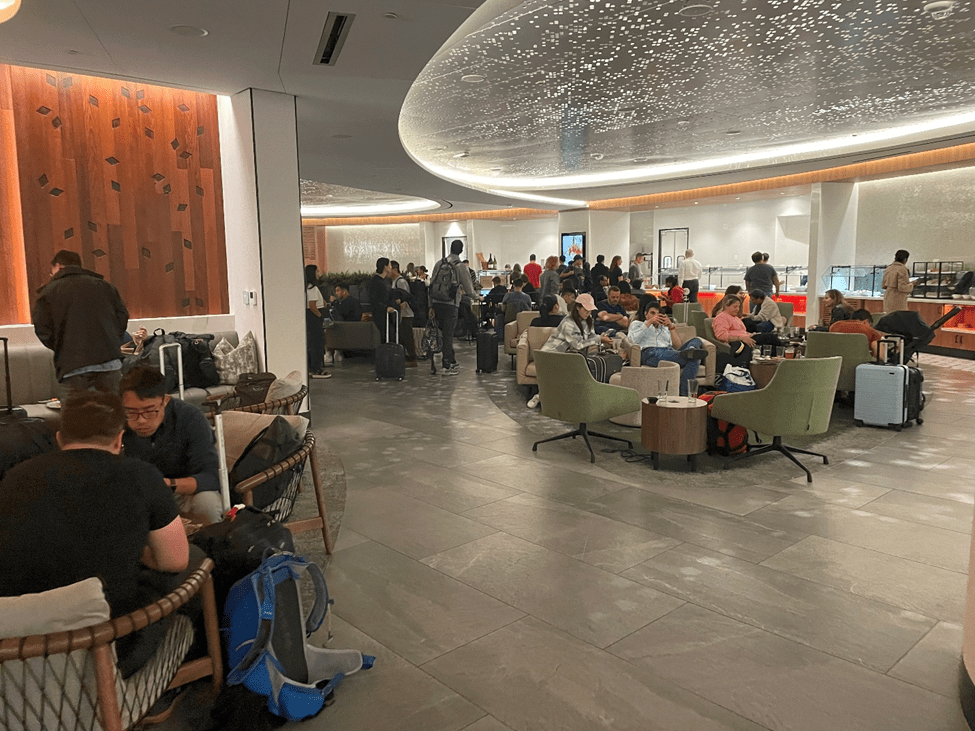
I really liked the ceiling design. I’m particularly not surprised by how busy the lounge is because almost everyone I know in the SF area has an Amex Platinum or Chase Sapphire Reserve.
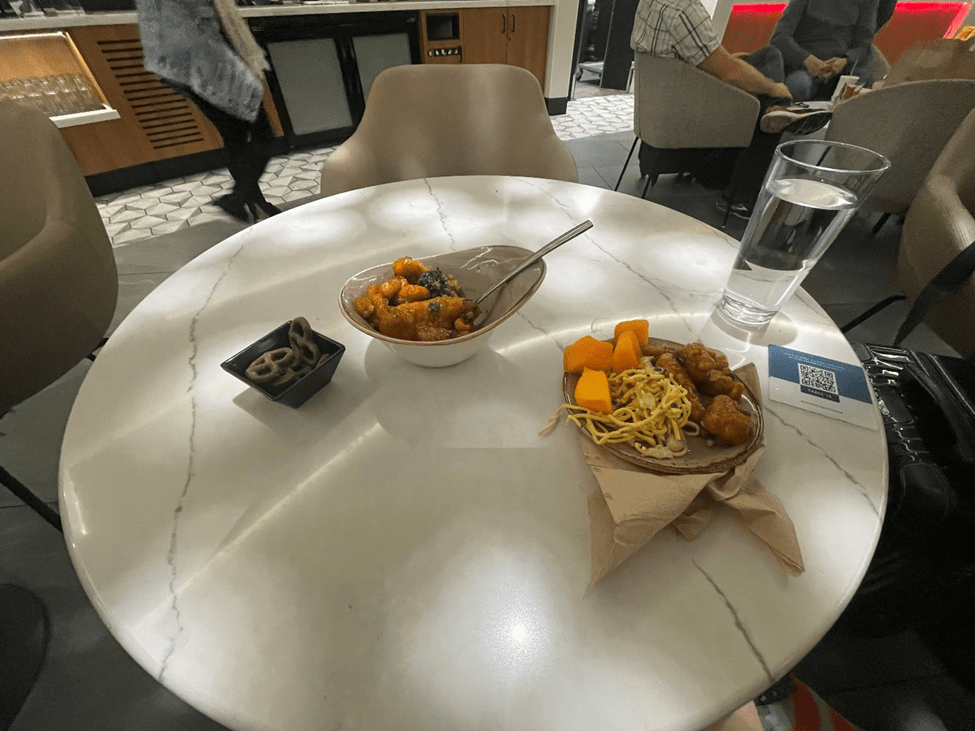
Food was self-service and consisted of some cold options:
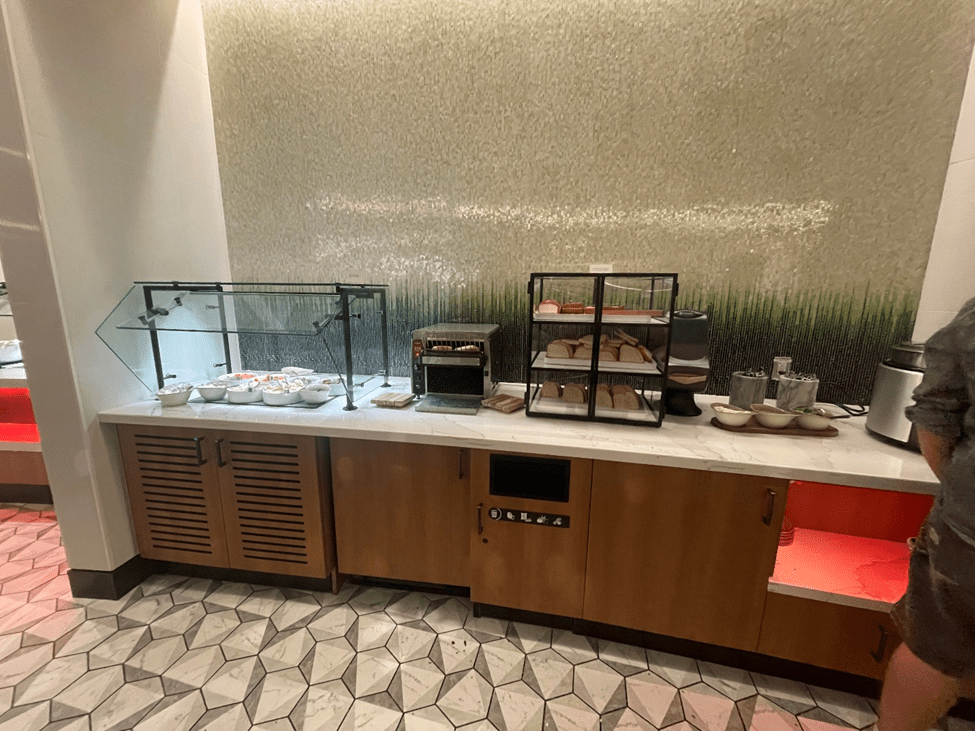
As well as a hot bar. But it was busy enough that they were out of plates when I got there, and we had to request them. Admittedly, we were given plates basically immediately, but it was a bit of a poor first impression.
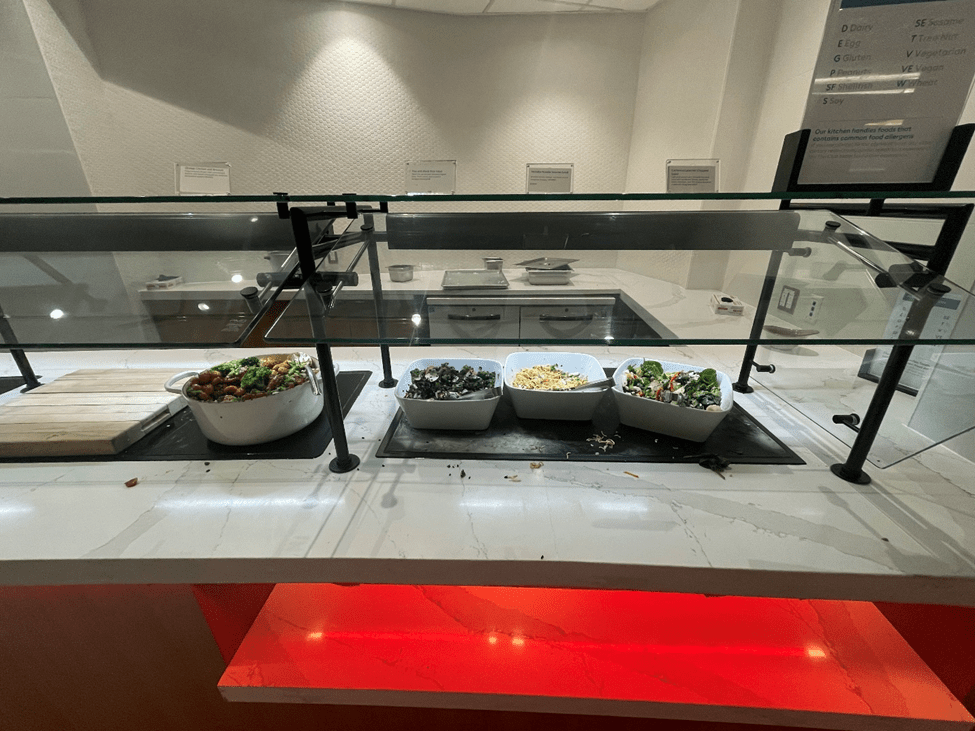
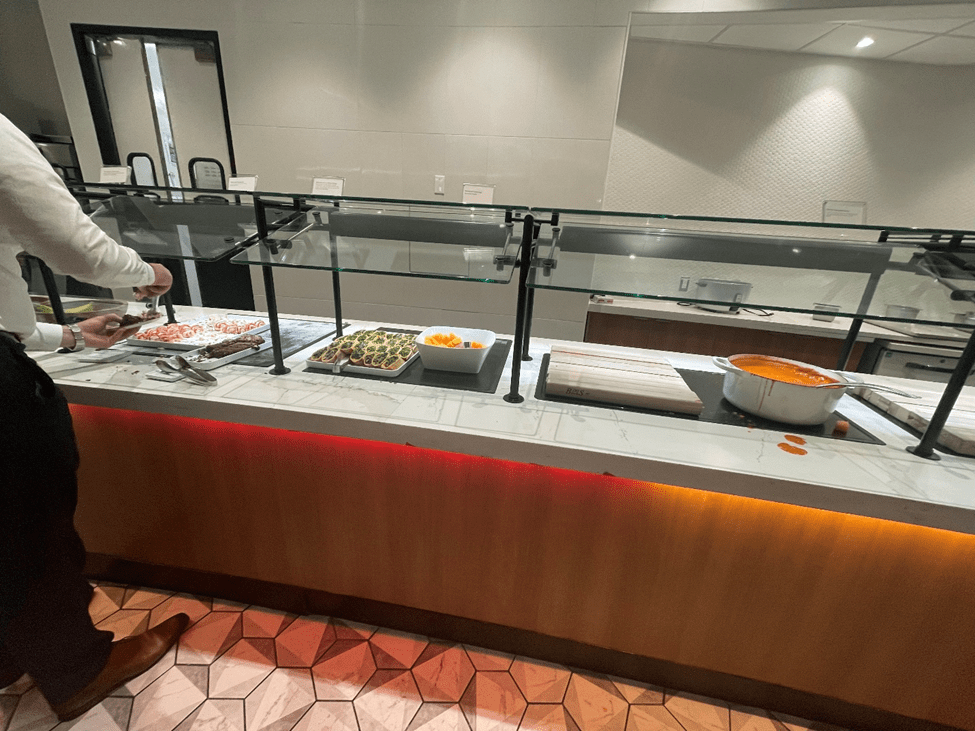
The food was a step above what I’ve experienced at other “The Club” locations, such as at the nearby San Jose Airport or in Baltimore.
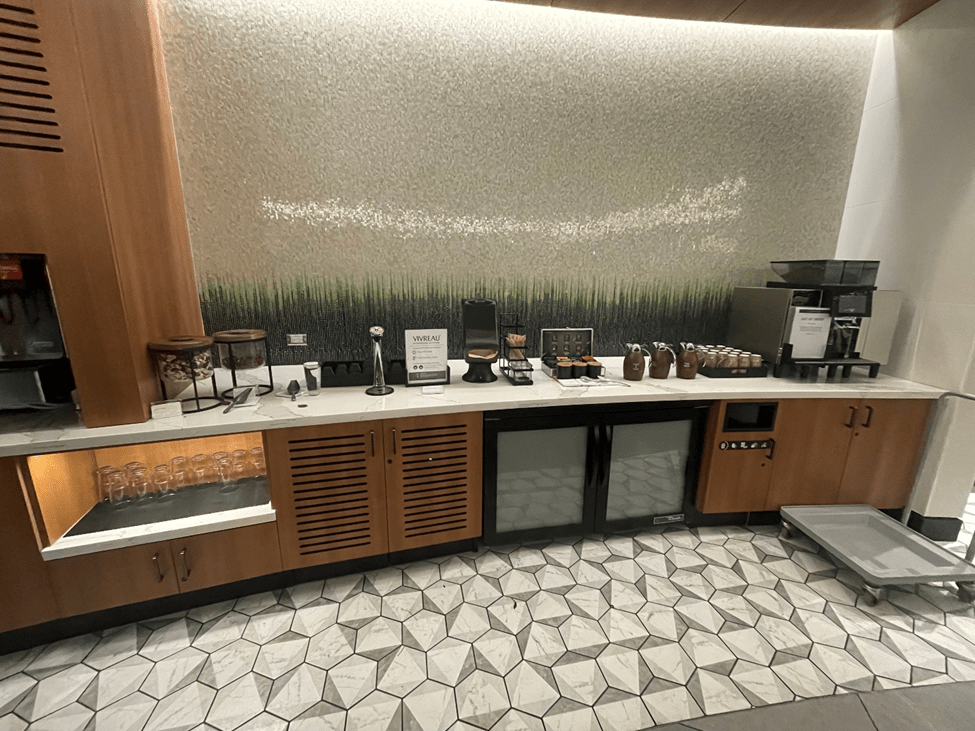
There was also a decent hot beverage selection.
As well as a bar and additional seating.
Since this lounge was so busy and far away from the AA gates, I decided to actually spend the rest of the time waiting for my flight in the Admirals Club, which I’ve been to many times at SFO. Finally, it was time to board my short flight. I didn’t have a checked bag (or much beyond a backpack), so I had no need to board early.
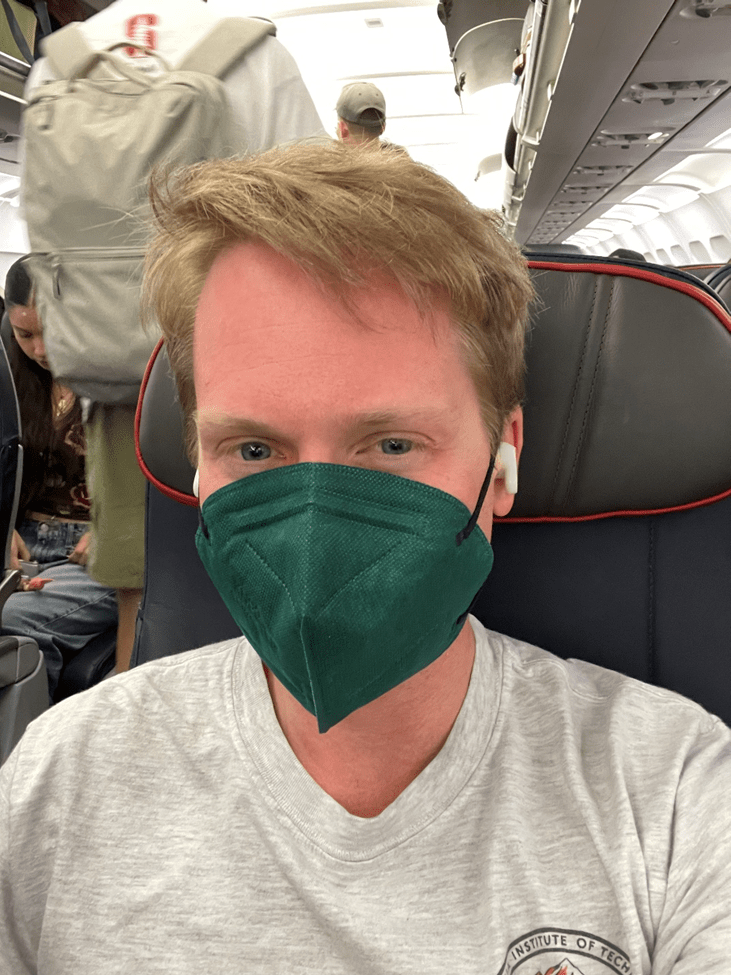
American offers free drinks to those seated in Main Cabin Extra, which is their extra legroom product. The “upgrade” is free for AA Platinum and Oneworld Sapphire and higher status holders. They don’t try to market it as a separate class of service like Alaska does with their Premium Class or Delta with their Comfort+. But they do at least differentiate slightly more than United, which doesn’t even offer free drinks.
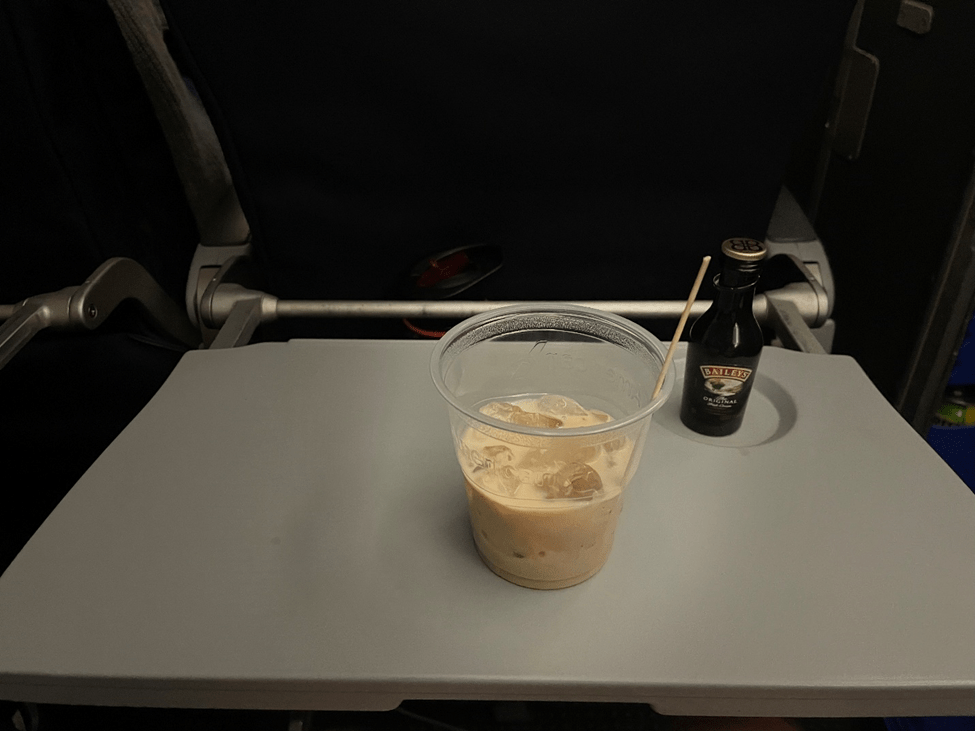
Upon arrival in Los Angeles, I was pleased that I wasn’t flying a regional aircraft because I didn’t have to ride a bus from the Eagle’s Nest to the main terminal. My ride was running late (which is to say was finishing work), so I stopped by the Flagship Lounge to wait for a few minutes.

Now, the main reason for showing up to the LA area that weekend was to go to the airshow at Long Beach Airport. They had several military planes, private aircraft of various sizes, and even electric aircraft! But most importantly (for me), they had the only Lockheed L1011 that was still airworthy. It was refitted to be a test plane, but they still had a handful of (very) retro Business Class seats in the front part.
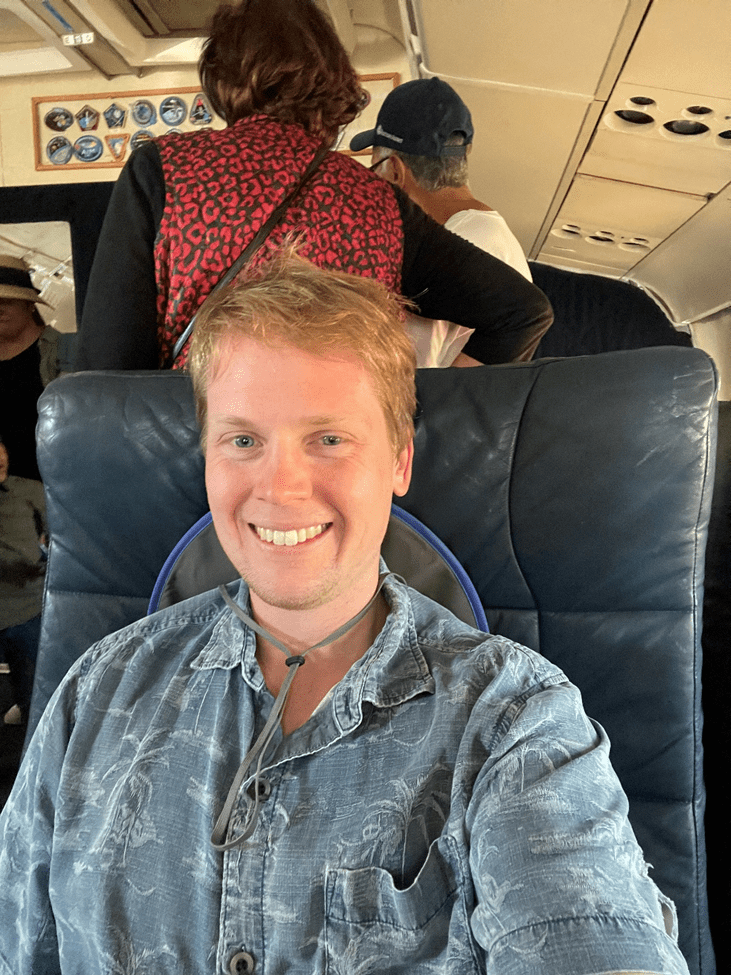
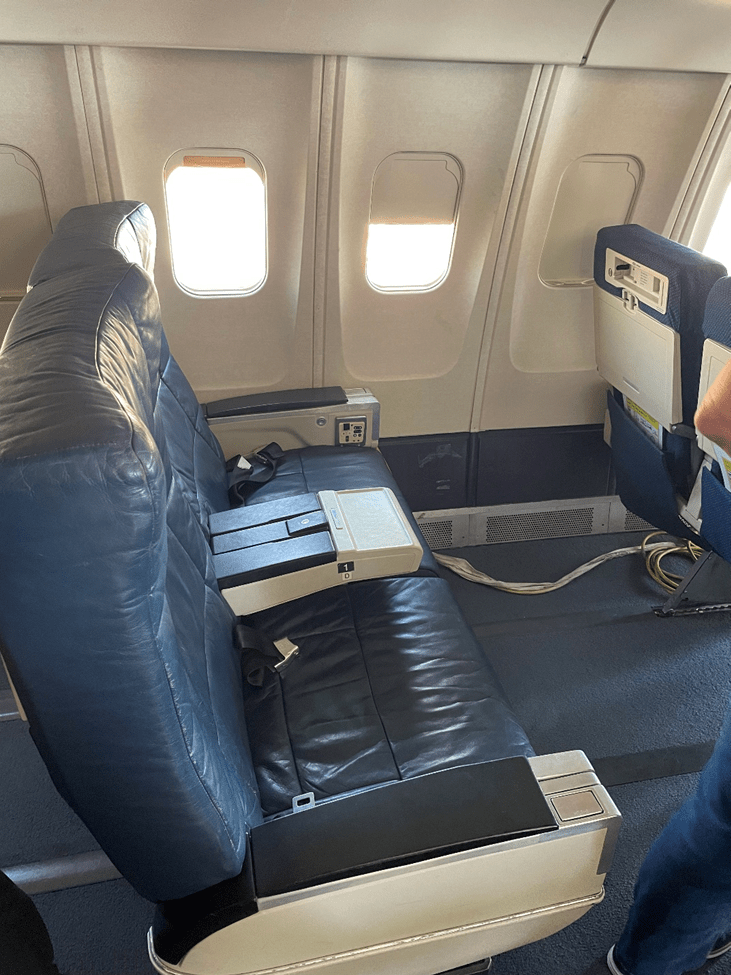
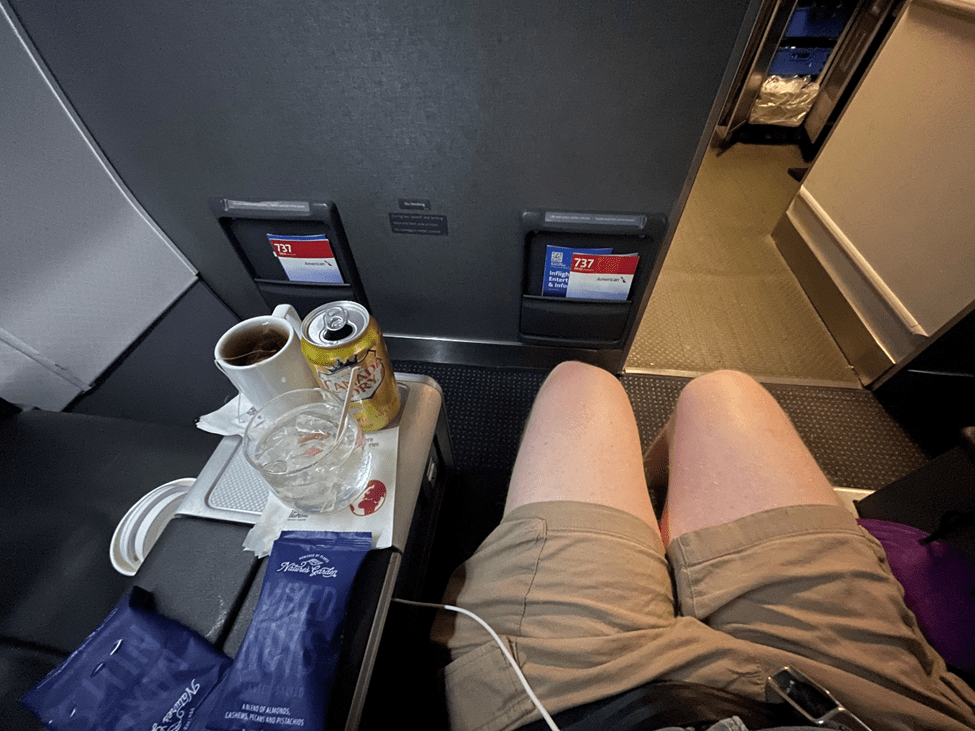
The evening after the airshow, it was time to head back to the Bay. I traded my old style business class seat for a modern seat. These modern seats are more ergonomic but much thinner. On balance, I’d say that the modern seats are more comfortable, but it really goes to show you how much premium aircraft seating as improved. That old L1011 seat would’ve been used as a Business Class seat for long haul flights. The equivalent seat I had on my 737 flight is marketed as “First Class” on domestic flights but is basically identical to the seat AA uses as its intercontinental Premium Economy product.
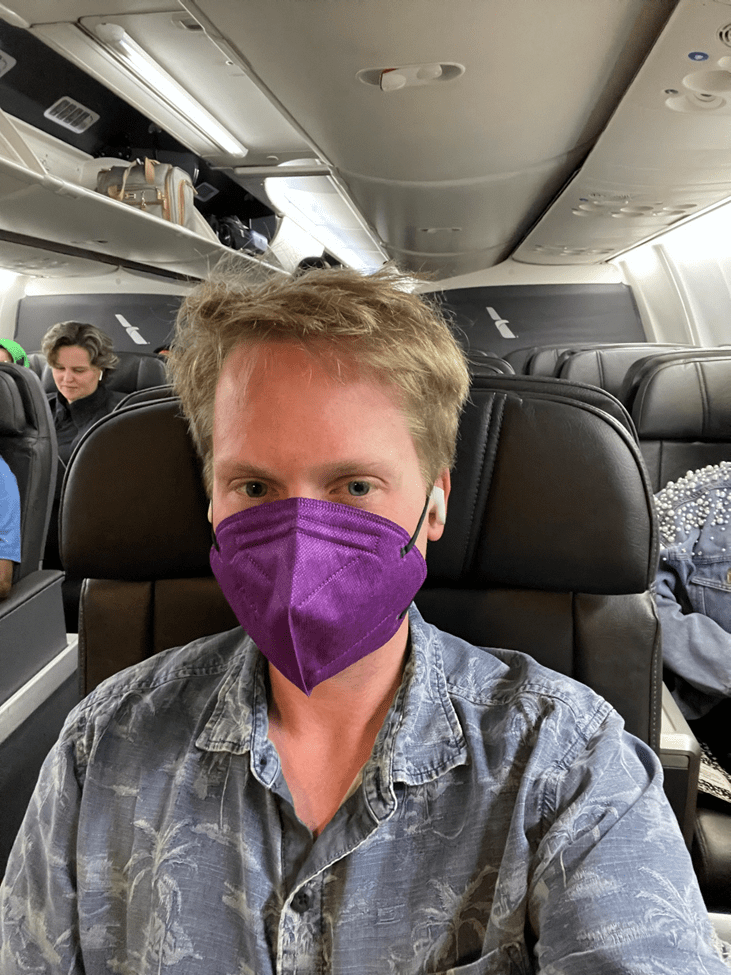
No complaints about my premium economy seat on this short haul flight, however. The service on this short flight was basically the same as on the way down, except my drink was served in a glass instead of a cup.
I’m used to not getting much service on these short flights, but I was just sent a survey to take for British Airways and was reminded that on the BA equivalent of this flight (e.g. London to Manchester), they serve a small meal. So, I’ll leave everyone with this question: is the worse hard product in European Business Class made up for by the improved soft product?
In summary, I thoroughly enjoyed my short trip to Southern California and the airshow. The ground experience at LAX with the Flagship Lounge is undoubtedly superior than at SFO, but that makes sense given that LAX is ostensibly an American Airlines hub (3/5 vs 5/5). The seat on the A319 in economy is definitely worse than the 737 first class seat, but both are standard for their respective cabins for this type of flight (3/5). The service on both flights was as expected for such a short flight (4/5). The actual snack/food offering was minimal in both directions and specifically less than what I usually get when I fly Alaska Airlines (2/5). The streaming entertainment and WiFi was standard for these flights (3/5). I’ll give an overall rating for the LAX-SFO leg in domestic First Class of 18/25.
I booked both these flights with cash in economy and so earned miles from the flights and credit card points based on the price of the flight. Each leg cost about $119, and I got an upgrade in one direction, so I’ll call that a solid win. I recently learned that the shuttle flights between SF and LA are the routes I’ve both flown most frequently in First Class but also most frequently in a middle seat (on Southwest).
 Michael's travel blog