After my trip back to Virginia, I decided to take one more trip before I started my new job in mid-December. Before August of 2022, I had flown Alaska a total of 3 times, all of which were between SoCal and Seattle. By the time this trip ended, that number would double. Though, it is still the case that all 6 of my Alaska flights have been to/from SoCal, and looking ahead at future travel, this will not change any time soon. I had considered purchasing an Alaska Airlines flight pass, given the number of flights I take within California, but the math just didn’t quite work out for me, unfortunately, and I wouldn’t have been able to credit those flights to British Airways to help me maintain my BA Gold status.
This time, there was no cheap fare from San Jose Airport to lure me away from SFO, which has many more flights to LAX than San Jose. Instead, I flew from Alaska Airlines’ hub in SFO to its hub in LAX. Alaska Airlines is definitely still an airline I’m learning more about and getting more used to. I didn’t previously appreciate the extent of its route network, which includes more than 30 destinations from each SFO and LAX. For context, American Airlines has about 50 destinations from LAX.
I arrived at San Francisco Airport by BART about 30 minutes before boarding began. I purchased and flew on this flight before Alaska updated their lounge access policies to exclude short flights in First Class from having lounge access, but I would have had access anyway thanks to my BA Gold status.
The Alaska Airlines lounge could not be located any closer to security in Terminal 2. It’s about 10 steps from the post-security seating to the entrance to the lounge. Alaska operates just a single lounge for its SFO operation, and at nearly 10 pm, it was not busy at all. Immediately upon entering the lounge, you’re greeted by what is best described as the campfire area, which feels extremely warm and inviting.
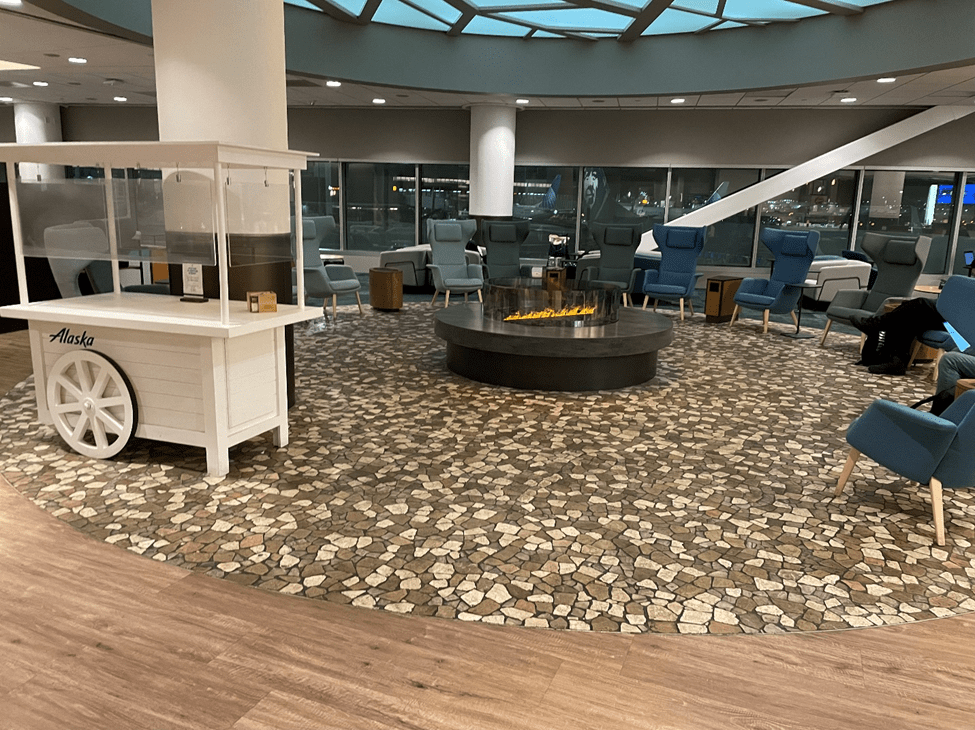
To the left are the bathrooms and work areas. To the right is the buffet, which we all know is what I’m really here for.
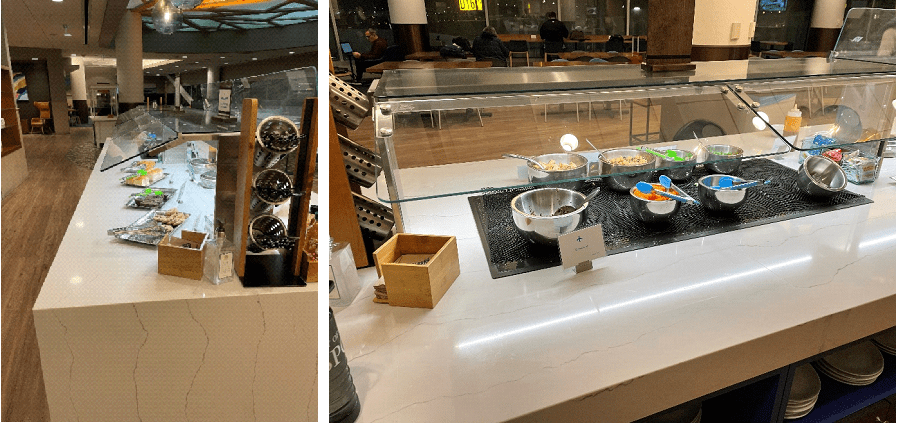
The buffet consisted of a build your own (cold) Korean bowl. No KBBQ was to be found here, but the bowls had several vegetable, rice, and protein options. But the star of the show, for my at least, was the Alaska Airlines pancake machine.
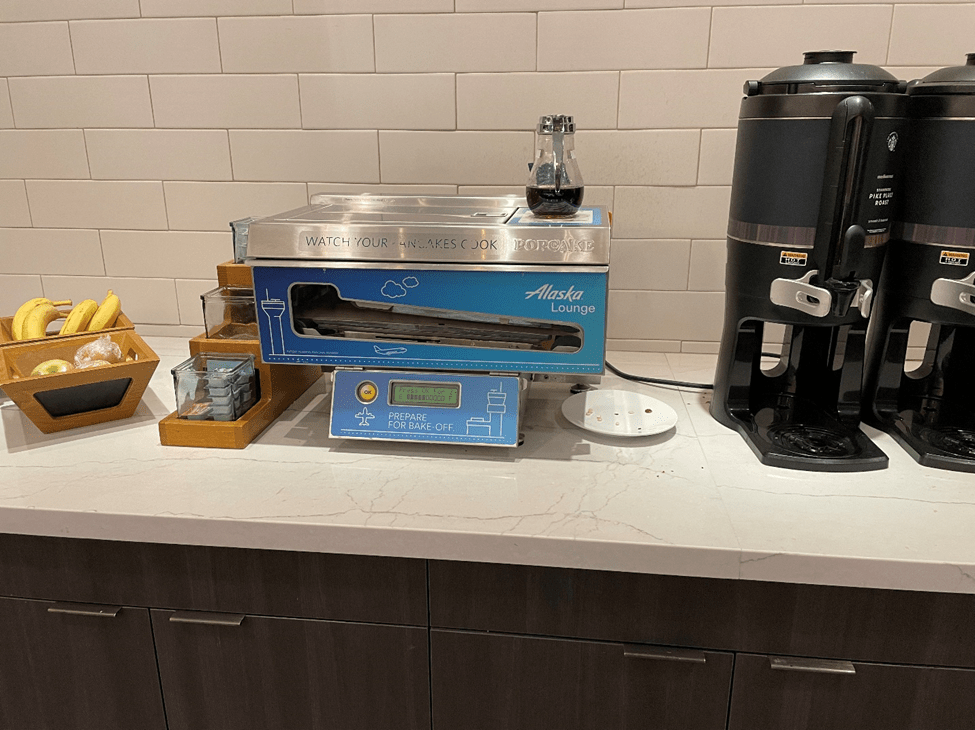
The pancake machine is operated with a “push for pancakes” button. The best part is that you can watch the pancake batter plop out twice (you always get 2 pancakes) and then get cooked as they travel down the conveyor belt before being spit out at the end. They also had an assortment of toppings available, including jelly packets, peanut butter, and, of course, maple syrup.
The pancakes were decent, on par with what you’d expect from pre-mixed batter. The Korean bowl was similarly decent, with all the vegetables tasting relatively fresh (but cold) and the rice tasting like it came from a buffet (and was cold). The pancakes were warm though!

This flight was operated on a 737-900, which means that it was operated by Alaska’s mainline fleet, unlike a lot of Alaska flights within California that are operated on regional aircraft. The seat on the 737 is somewhat more plush and spacious than on the EMB-175; however, the 2-2 configuration is a lot less fun than the 1-2 configuration on a regional aircraft, where I get to have both a window and an aisle seat. Alaska’s first class seats were standard as far as domestic First Class seats go and very comfortable for the short intra-California flight.
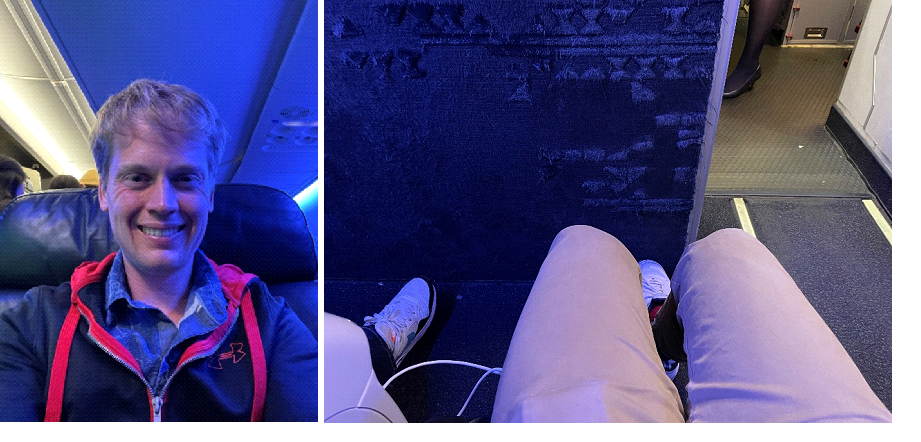
After taking my seat, I overheard the flight attendants talking in the galley about the catering. Apparently there had been a catering error, and the flight had not been catered, so no food and only some drinks were on-board. The flight attendant made an announcement that the lack of catering was due to the short flight time—which, in the US, at least—is believable. My previous Southwest flight between LA and the Bay had no service at all due to “turbulence”, even though there was almost none n the flight. Avid readers will remember this happened to me previously, on my flight from Dublin to London earlier this year. British Airways gave me 10 000 Avios as an apology for not serving a meal. I contacted Alaska’s customer service about the lack of catering and was very promptly given a coupon code for a $50 discount off a future flight, which was great. Like American’s 737s, Alaska only offers streaming in-flight entertainment and Wi-Fi on board. I haven’t actually tried it out. The seats also had a standard 120V plug, which was convenient for charging. One of the great things about domestic US flights is the massively improved IFE over the equivalent flights in Europe.
In summary, Alaska from the Bay to SoCal round 2 was quick and comfortable, which is what you want on a flight like this. The ground experience at SFO was typical for a US carrier, with slightly improved food compared to my standard Admirals Club adventures (4/5). The 737 first class seat was standard for a domestic narrow-body aircraft (3/5). Drinks were available but no food. Since I got a voucher as an apology so readily, I will skip this score. Service was standard (3/5), as was the streaming-based IFE (3/5). Overall, this flight gets a 13/20, which seems a bit low for a flight that had no real problems, but I do try to rate flights using the entire spectrum of point scores.
This flight came in at a relatively standard $159, which I put on my Amex Platinum Card to earn 5x points/$. I credited the flight to British Airways, which should earn me 625 Avios and 40 tier points. I definitely wish flights with Alaska got the same 100% bonus Avios on BA that flights with AA do. The total points are worth around $20, for a return of just under 13%. Like the previous iteration, the points didn’t credit correctly, but this time, I was able to get credit more easily.
 Michael's travel blog
4 thoughts on “‘Hub’ to ‘Hub’ on Alaska Airlines”