Avid readers know that although airplanes are my favorite form of transportation, trains are by far my most common form of transportation. Currently, I commute to work by train (Southeastern Rail) and get around London by train (Underground mostly). In fact, I hadn’t even been in a car for three weeks prior to my flight to Austin.
Back in March, I went to Northwest England by train, traveling on the Avanti service to Manchester and from Liverpool. On this most recent trip to the US, I took a train journey that I’m very familiar with: Alexandria, VA to Richmond, VA. It’s generally uncommon in the US to travel by train, since most cities are too far apart for the train to be efficient, and generally one needs a car when they get to another city anyway. After the Austin part of my trip, I visited a friend in DC and went and checked out a few apartments. To get home to my parents’ place, the best way by far is to take the train. Richmond is the tail end of the Northeast regional train network, and so the track hasn’t been electrified, which means there are no Acela trains. However, the route still sees 7 trains per day, which is poor by European standards but decent by American standards. Washington to New York sees 23 trains per day.
For all trips southbound from the DC suburbs, it’s almost always better to get the train from Alexandria instead of from Washington Union station. The Alexandria station is near the highway, whereas Union station is in central DC, which means Alexandria is often quicker to get to by car. Alexandria train station is also substantially smaller than DC’s station, so the walk from the parking lot to the southbound train platform is about 50 feet.
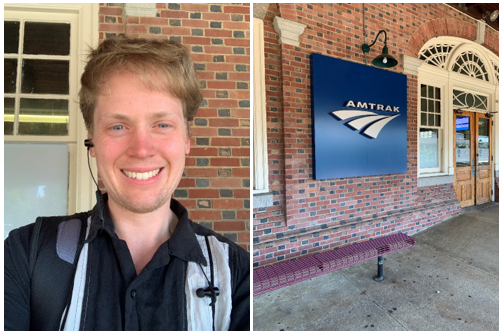
I was travelling with a lot of luggage because I brought back three suitcases worth of items from England for round 2 of 3 of moving back to the US. Amtrak limits you to two suitcases and two carry-on bags (which is a lot). If you take any additional luggage, you need to pay a $20 excess baggage fee, which seemed perfectly reasonable to me. Upon arrival, I went to the counter to pay the fee, but I was told I could actually check two of my bags and avoid the fee. I’d read online that checking bags was a thing on Amtrak, but only on select services to select destinations. Turns out the Palmetto service offers checked baggage service and Richmond is one of the destinations that has the facilities for it, which was great. It also meant I didn’t have to pay the excess bag fee.
I gave my bags to the check in agent, who weighed them and put bag tags on them to ‘RVR’, which is the Amtrak designation for Richmond’s Staples Mill Road station.

Travelling practically hands-free was awesome! I might do this more often.

The two best parts of Amtrak travel are 1) not having to go through security and 2) only having to arrive about 15 minutes before the train departs.
Every time I get on an Amtrak service, I’m amazed by how big the trains are compared to British trains. Both the US and the UK use standard gauge rail, but the US has a substantially larger loading gauge than the UK. Additionally, in the UK (and Europe in general), station platforms are at door height. Standing higher makes getting on/off the train easier and makes the train look substantially smaller, even though Continental European trains are similar in height to American trains.
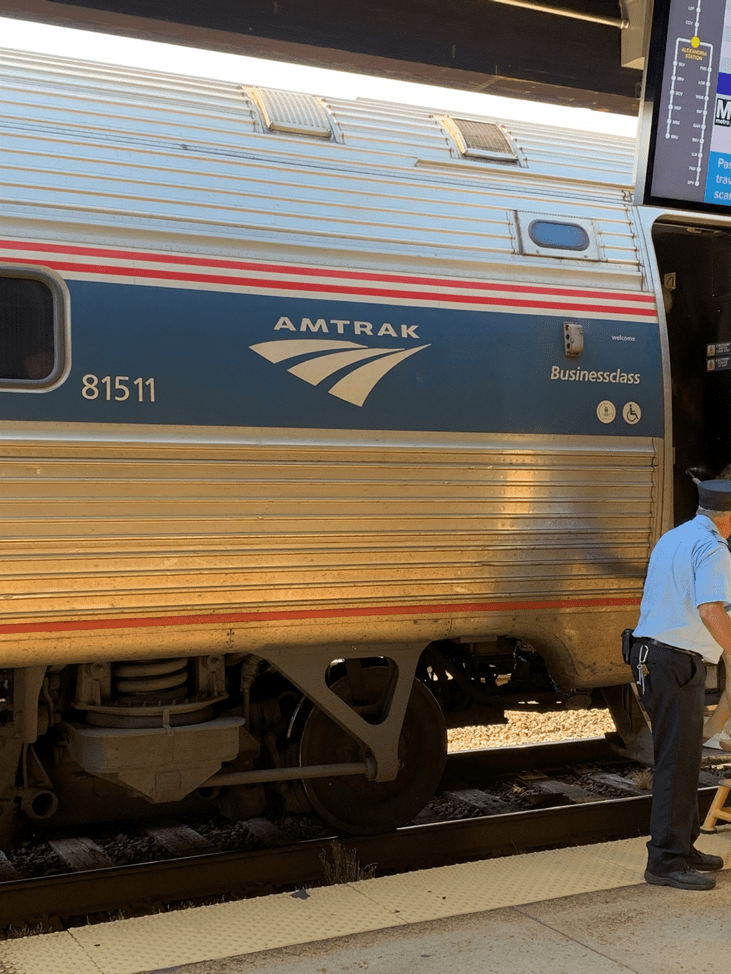
I bought a coach ticket in advance for the Amtrak service for only $9.50, which is substantially lower than the $67 this train can cost when booked on a flexible ticket. Amtrak emailed me to see if I wanted to put in a bid for a business class upgrade. Since the ticket had been so cheap and, at the time, I was worried about my luggage, I put the minimum bid in of $14, which was accepted about two hours before the train was due to depart.
I’ve never found business class to particularly be worth the upgrade on these trains, which regular readers will find funny because I’d pay $14 for an upgrade on a < 2-hour plane flight all day every day. Actually, I’d also pay the $14 for an upgrade on a 2-hour train ride in the UK because their First-Class seats are actually a noticeable step up, and the cabins are generally very empty. British trains also offer lounge access in most stations; Amtrak generally only offers lounge access for passengers traveling in First Class on the Acela service or passengers with an overnight cabin reservation. There are only 7 Acela lounges, however, most of which are in the Northeast.
On this train, however, both coach and business class are in a 2 – 2 configuration, and coach seats are more comfortable than domestic first class seats on airplanes. The benefit of business class is more space and a free non-alcoholic drink in the dining car.
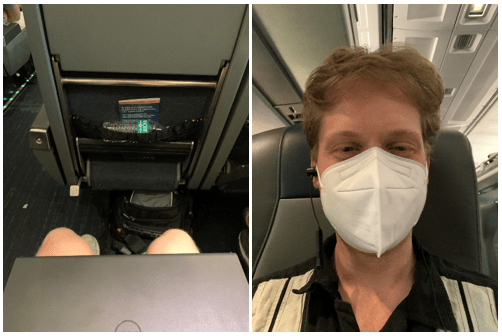
The legroom in business class was plentiful, and it had a similar type of footrest to those premium economy footrests that I don’t like. In this case, the footrest was more reasonable because of the size of the seats and the legroom available. I still didn’t use it though.
Since the seats aren’t actually that much bigger in business class, the main advantage of it, in my opinion, is simply that there are fewer people in the coach, which makes it quieter.
Since I’ve been working on expanding the scope of the travel blog, I decided to add a review of the Avanti West Coast service from London to the Northwest Powerhouse of Manchester and Liverpool. I travelled to see a handful of friends of mine that still live up north just for a short weekend trip. I left on Friday evening direct from London Euston to Manchester Piccadilly and return on Sunday afternoon direct from Liverpool Lime Street to London Euston.
Avanti train tickets come in 3 flavors (with different amounts of flexibility): advance, off-peak, and anytime. Advance tickets are for one specific train and anytime are for any train on a given day. Off-peak tickets are valid for any off-peak train. Most trains are actually off-peak.
 Michael's travel blog